
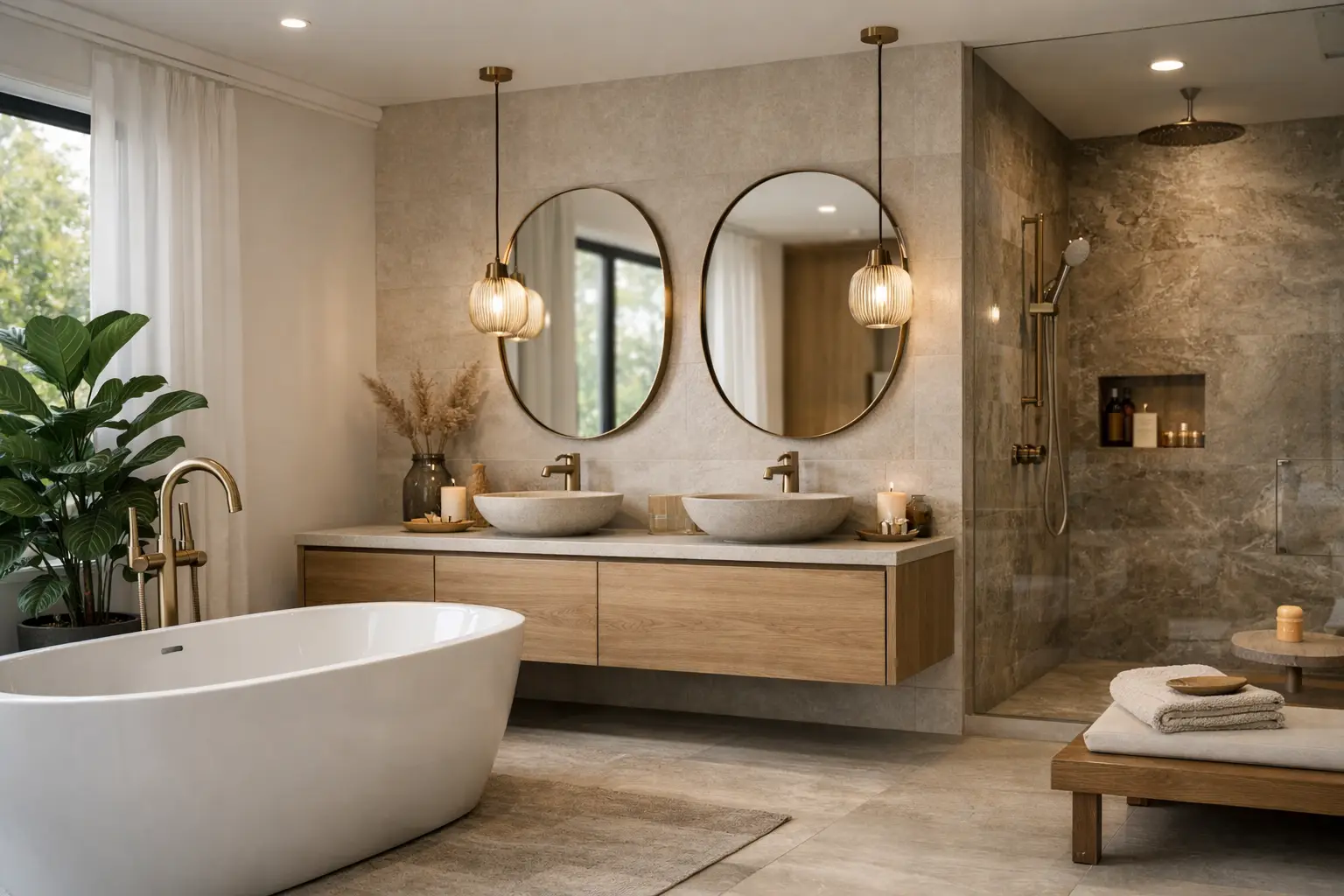
A lot of homeowners start a bathroom remodel by saving photos of what looks good. Then reality shows up – steam, storage, morning traffic, cleaning, aging fixtures, and a budget that has to work as hard as the design. That is why bathroom design trends 2026 are moving in a practical direction. Homeowners still want a beautiful space, but they also want comfort, durability, and choices that make daily life easier.
The biggest shift is not one single color or tile shape. It is a move toward bathrooms that feel more personal and more usable. Instead of copying a showroom look, homeowners are choosing details that match how they live. For a family bathroom, that may mean better storage and low-maintenance surfaces. For a primary bath, it may mean a warmer, quieter space that feels more like a retreat than a utility room.
Bathroom design trends 2026 are getting warmer
For years, bright white bathrooms and cool gray finishes dominated remodels. In 2026, warmer tones are taking over. That does not mean heavy, dark, or dated. It means softer whites, creamy paint colors, warm greige, sand tones, natural wood looks, and stone with movement and depth.
This change matters because bathrooms can feel cold very quickly. Tile, glass, mirrors, and metal all reflect light, and when every finish leans cool, the room can feel sterile. Warmer palettes make the space feel more inviting without sacrificing a clean look. Homeowners who still want a bright bathroom are often choosing warm white walls with natural oak vanities or brushed nickel and champagne bronze accents instead of stark contrasts.
There is a trade-off here. Warm finishes can be timeless, but only when they are balanced. If every surface is beige, the room can lose definition. The best results come from mixing tone and texture – for example, pairing a warm vanity with crisp countertops or using patterned tile to add structure.
Natural textures are replacing flat, one-note finishes
Bathrooms in 2026 are leaning into texture. Wood-look vanities, zellige-inspired tile, fluted cabinet fronts, ribbed glass, and stone with visible veining are all gaining attention. These details bring depth to the room and help a remodel feel custom instead of off-the-shelf.
This is especially useful in suburban homes where homeowners want a bathroom that feels elevated but still appropriate for the rest of the house. Texture adds character without demanding bold color choices. It also photographs well, which is one reason it shows up so often in inspiration images.
Still, not every textured surface belongs in every bathroom. Handmade tile can be beautiful, but it may require more care depending on the finish and grout selection. Fluted wood details look high-end, but they need thoughtful placement in spaces with heavy moisture. Good design is not only about what looks current. It is about choosing materials that can hold up to real use.
Larger showers continue to lead the way
If there is one feature that consistently stays high on homeowners’ wish lists, it is a better shower. In many remodels, the tub-shower combo is giving way to a larger walk-in shower with cleaner lines and more comfortable access. This remains one of the strongest bathroom design trends 2026 has to offer because it improves both appearance and daily function.
Frameless or low-profile glass keeps the room feeling open. Built-in niches reduce clutter. Linear drains and low-threshold entries support a more streamlined look while also improving accessibility. Many homeowners are also choosing larger-format tile in showers because it creates fewer grout lines and can make cleaning easier.
That said, layout matters. A large shower can be a smart upgrade in a primary bathroom, but in a hall bath used by kids or guests, removing the only tub may not be the right decision. This is where working through the design before demolition matters. The right plan depends on how the room is used now and how you expect to use it in the next several years.
Vanities are working harder than ever
Vanity design is becoming more intentional. Instead of treating the vanity as just a cabinet under the sink, homeowners are using it as a storage hub and a style anchor. Floating vanities remain popular, especially in modern and transitional spaces, because they open up the floor visually. Furniture-style vanities are also strong, particularly in homes where warmth and character are priorities.
The real story, though, is storage. Deep drawers, built-in organizers, outlet-ready drawers for electric toothbrushes and styling tools, and smart compartment planning are all becoming more common. Homeowners are less interested in oversized vanities that waste space and more interested in storage that actually works.
Double vanities still appeal to many couples, but they are not automatic anymore. In some layouts, one larger vanity with better counter space and better drawer organization delivers more value than squeezing in two smaller sink areas. It depends on the room and the household routine.
Statement lighting is replacing basic bathroom fixtures
Lighting is becoming a central design decision instead of a last-minute selection. Sconces beside the mirror, layered overhead lighting, and decorative fixtures over freestanding tubs are all showing up more often. Homeowners want bathrooms that look finished, not builder-basic.
Better lighting also affects how the bathroom functions every day. A single overhead fixture rarely gives enough flattering, even light for grooming. Layered lighting solves that problem while adding warmth and depth. Dimmer controls are another upgrade that makes a noticeable difference, especially in primary baths where homeowners want brighter light in the morning and softer light at night.
This is one area where quality installation matters as much as fixture style. Placement, spacing, and color temperature all affect the final result. A good fixture can still underperform if the lighting plan is weak.
Wellness features are becoming mainstream
Spa-inspired design is no longer limited to luxury homes. In 2026, more homeowners are asking how a bathroom can support comfort and routine, not just resale value. Heated floors, better ventilation, quiet exhaust fans, towel warmers, shower benches, and handheld sprayers all fit into this trend.
The key difference is that homeowners are being more selective. They want features they will actually use. A heated floor in a cold-climate home may be worth every dollar. A steam shower may sound appealing, but it requires the right enclosure, ventilation, and budget. Good remodeling decisions come from matching the feature to the lifestyle, not from adding upgrades just because they sound impressive.
This practical approach is where full-service remodeling becomes valuable. A good plan takes the look homeowners want and connects it to materials, layout, and installation details that support the result long term.
Sustainability is showing up in smarter material choices
Homeowners are paying more attention to durability, maintenance, and water use. That does not always mean chasing buzzwords. Often, it means choosing products that last longer, clean more easily, and reduce waste over time.
Quartz remains a strong countertop choice because it is dependable and low maintenance. Porcelain tile continues to outperform many trend-driven materials because it offers design flexibility and durability. Water-efficient faucets, showerheads, and toilets are also getting more consideration, especially when homeowners are replacing outdated fixtures anyway.
Sustainable design in a bathroom is often less about making a statement and more about making better long-term decisions. A finish that hides water spots, a cabinet material that handles moisture well, or a layout that improves ventilation can all contribute to a bathroom that performs better for years.
Personal style is finally beating cookie-cutter design
One of the healthiest shifts in bathroom remodeling is that homeowners are becoming less interested in copying a trend exactly. They still want current design, but they want it to feel like it belongs in their home. That may mean mixing polished and textured finishes, choosing a classic tile pattern in a warmer color, or combining modern plumbing fixtures with more traditional cabinetry.
This is good news for anyone planning a remodel. Trend awareness matters, but the best bathrooms are not built to chase a short-lived look. They are built around solid materials, thoughtful layout, and details that fit the home. In our experience at JG Home Services, the projects that age best are the ones where homeowners balance inspiration with practical choices.
If you are planning a remodel, start by thinking beyond the photos you saved. Consider how much storage you need, who uses the bathroom, which materials you are willing to maintain, and where it makes sense to spend for daily comfort. Bathroom design trends 2026 point in a clear direction: spaces that feel warmer, work better, and hold their value because they are designed for real life. The best remodel is not the one that follows every trend. It is the one that still feels right on a busy Monday morning and five years later.