
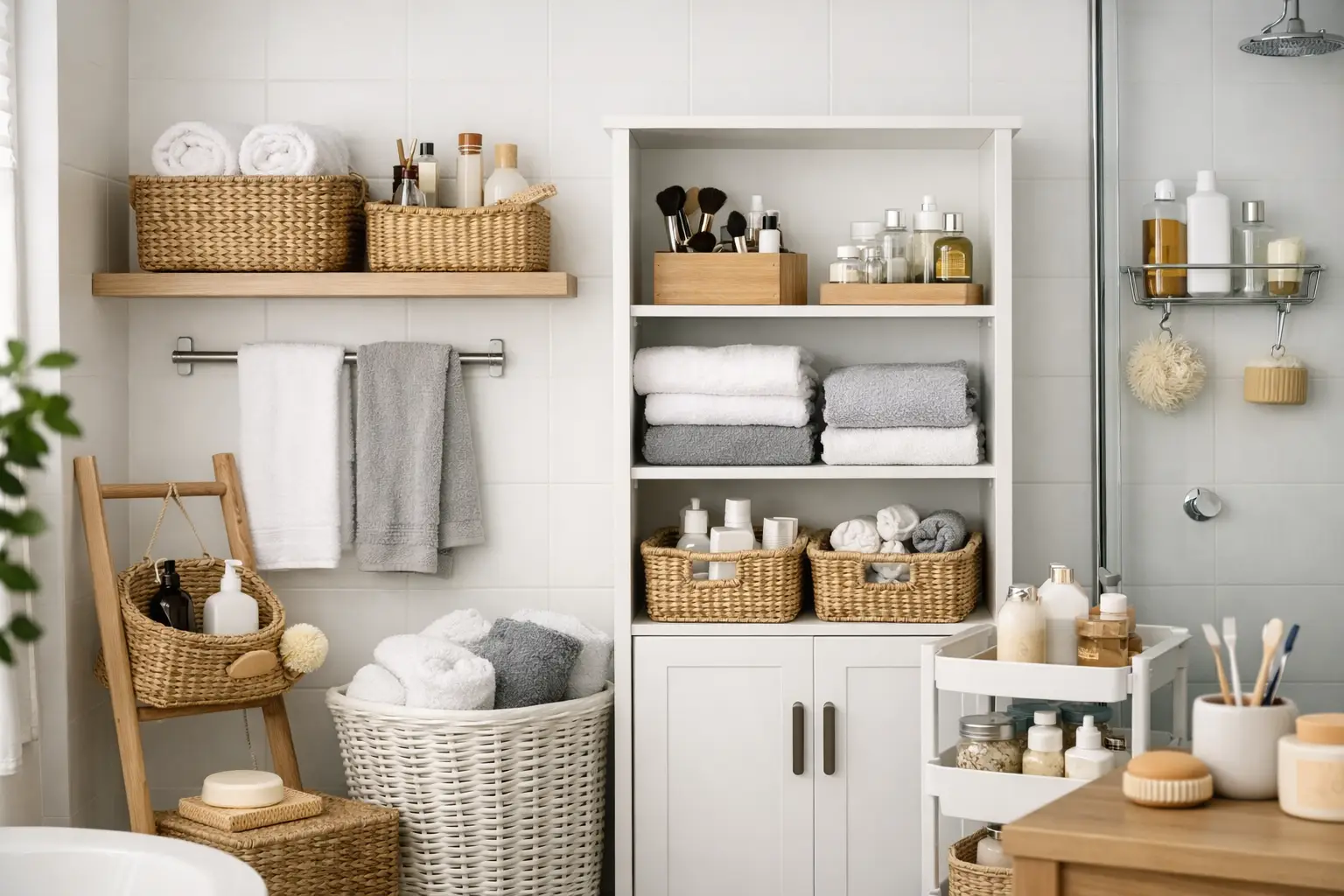
A bathroom can look finished on install day and still feel frustrating a week later. The usual problem is not the tile or the vanity color – it is storage. The best bathroom storage solutions make everyday routines easier, keep counters clear, and help the room stay clean without feeling crowded.
For most homeowners, storage works best when it is planned around real habits. That means thinking about where towels pile up, where extra toiletries end up, and how many people use the space each morning. A good bathroom layout is not just about fitting more in. It is about placing the right storage in the right spot so the room feels calm and easy to use.
What the best bathroom storage solutions actually do
The best bathroom storage solutions solve three problems at once. They reduce visible clutter, improve access to daily-use items, and protect the room from looking overbuilt. More storage is not always better if it makes the bathroom feel tight or top-heavy.
That is why storage should be part of the remodeling plan, not an afterthought. A recessed niche, a better vanity configuration, or a linen tower can add function without taking away comfort. In smaller bathrooms especially, every inch matters, and poorly placed cabinets can make the room feel harder to use.
Start with the vanity because it carries the room
In most bathrooms, the vanity is the single most important storage piece. It handles daily-use items, shapes the layout, and sets the tone for how organized the room feels. If the vanity is too small, the countertop becomes storage. If it is too large, it can overwhelm the room.
Drawers often outperform standard cabinet doors for bathroom storage. Deep drawers with internal dividers make it easier to separate hair tools, grooming products, backup supplies, and cleaning essentials. You can see what you have without kneeling down and reaching into the back of a dark cabinet.
That said, the right choice depends on the user. A family bath may need wider drawer stacks and more shared storage. A guest bath may be better served by a compact vanity with enough room for hand towels and basic supplies. In a primary bath, double vanities can work well, but only if the room still has enough circulation space to feel open.
Drawer-based vanities vs. open shelving
Open shelving under a vanity can look clean in photos, but it usually requires disciplined upkeep. Folded towels and baskets can soften the look, yet open storage also leaves everything exposed to dust, humidity, and visual clutter. For homeowners who want a polished, low-maintenance bathroom, closed storage is often the better long-term choice.
Drawer-based vanities offer better organization and a more finished daily experience. Open shelving can still play a role, especially in guest baths or powder rooms where storage needs are lighter and appearance matters more than capacity.
Wall storage should add function without crowding the room
When floor space is limited, walls do more of the work. This is where medicine cabinets, recessed storage, and floating shelves can make a real difference. The key is choosing options that feel integrated rather than added on.
A recessed medicine cabinet is one of the most efficient upgrades in a bathroom remodel. It gives you practical storage at eye level without projecting into the room like a surface-mounted cabinet. For smaller bathrooms, this matters. It preserves visual space while keeping daily essentials close to the sink.
Floating shelves can work, but placement is everything. Over the toilet is a common spot, and it can be useful for towels or decorative storage baskets. Still, too many shelves in a small bathroom can start to feel busy. If your goal is a cleaner, more spacious look, one well-placed shelf usually works better than several.
Built-in niches are small details with big payoff
Niches are often associated with showers, but they can be useful elsewhere too. In the shower, a built-in niche keeps bottles off the floor and ledges, which immediately improves both appearance and function. It also makes cleaning easier because there are fewer loose items to move around.
Outside the shower, wall niches can provide a subtle place for toiletries, rolled towels, or decorative accents. They are especially effective when designed as part of the renovation rather than squeezed in afterward. Done well, they feel intentional and custom.
Vertical storage helps when the footprint is tight
Many bathrooms do not have room to expand outward, so the smarter move is upward. Tall linen cabinets, narrow storage towers, and stacked built-ins take advantage of vertical space without using much floor area.
A linen tower beside the vanity can be one of the best bathroom storage solutions for households that need both everyday access and backup supply space. It keeps towels, tissue, and personal care items organized in one zone. This works especially well in primary bathrooms and family baths where multiple people need storage that stays easy to manage.
The trade-off is visual weight. Tall cabinets can make a small bathroom feel boxed in if they are too bulky or placed in the wrong location. Proportion matters. A slim tower with clean lines usually feels better than a heavy cabinet crammed into a corner.
Hidden storage often works harder than visible storage
Some of the most effective bathroom storage is the kind you do not notice right away. Toe-kick drawers, pull-out organizers, built-in hamper cabinets, and mirrored medicine cabinets all help reduce clutter without adding visual noise.
Pull-out storage is especially helpful in lower vanity cabinets where space often gets wasted. Instead of reaching around plumbing or stacking supplies in awkward piles, homeowners can access items quickly and keep categories separated. For busy households, that saves time every day.
Built-in hamper storage is another smart option if the bathroom has enough room for it. It keeps laundry contained and off the floor, which can make the whole room feel cleaner. Not every bathroom can support this feature, but in a well-planned remodel, it adds convenience that homeowners appreciate long after the project is done.
Storage should match how the bathroom is used
Not every bathroom needs the same solution. A powder room has different priorities than a shared family bath, and a primary bathroom should support a very different routine than a guest space.
In a hall bath, durability and flexibility matter most. Storage has to hold up to shared use, changing needs, and a mix of products. In a primary bathroom, homeowners often want a more refined setup with dedicated zones, better drawer organization, and a cleaner countertop. In a guest bathroom, storage can be lighter, but it should still be welcoming and practical.
This is why one-size-fits-all advice often falls short. The best plan depends on room dimensions, plumbing locations, who uses the bathroom, and how much storage already exists elsewhere in the home.
The best bathroom storage solutions are built into the remodel
Storage tends to work best when it is designed as part of a larger renovation. That gives you more control over cabinet sizing, wall framing, fixture placement, and usable clearances. It also helps avoid common mistakes, like choosing a vanity that looks good in a showroom but creates traffic issues once installed.
A full-service remodeling approach can make a big difference here. When design, material selection, and installation are coordinated from the start, storage becomes part of the room’s function and finish instead of a patchwork of add-ons. That is often where homeowners see the biggest improvement – not just in capacity, but in how the bathroom feels every day.
At JG Home Services, that planning mindset is part of how bathroom remodels stay practical, attractive, and aligned with the way homeowners actually live. Good storage is not filler. It is one of the details that turns a bathroom from acceptable to genuinely comfortable.
Avoid the common mistakes that waste space
The biggest storage mistake is choosing features based on appearance alone. Open shelves, oversized mirrors, or decorative cabinets may look appealing, but they need to perform well in daily use. Bathrooms deal with moisture, frequent traffic, and limited space, so attractive storage still has to be easy to clean and easy to reach.
Another mistake is ignoring what belongs elsewhere. Not everything needs to live in the bathroom. If backup bulk items can be stored in a nearby linen closet, the bathroom itself can stay more focused on daily essentials. That often leads to a cleaner design and a more comfortable room.
It also helps to be realistic about maintenance. Glass shelves, exposed baskets, and heavily styled counters may require more upkeep than many homeowners want. If your goal is a bathroom that stays organized with less effort, simpler closed storage usually wins.
When bathroom storage is done right, the room works better without calling attention to itself. You notice it in the clear counter, the easy morning routine, and the fact that everything has a place. That is usually the best sign you made the right choice.