
A finished basement can become the most flexible room in your home – a family lounge, playroom, guest suite, workout area, or entertainment space. But the floor beneath it has to handle conditions that upstairs rooms rarely face. Knowing how to choose basement flooring starts with one question: how much moisture risk does your basement have today, and how will your family use the space tomorrow?
The best-looking material is not always the best basement material. A floor that performs well in a dry living room may swell, loosen, or develop odors below grade. The right choice balances moisture resistance, comfort, durability, style, and the condition of your concrete slab.
Start With Moisture, Not Color
Basements are surrounded by soil, which means they are naturally more exposed to humidity, groundwater, and temperature changes. Even a basement that has never flooded can have moisture vapor moving through the concrete slab. That vapor can affect adhesives, underlayment, and flooring materials over time.
Before selecting a finish, look for warning signs: damp spots, white mineral deposits on concrete, musty odors, peeling paint, or recurring condensation around walls and pipes. If your basement has had water intrusion, solve the source first. New flooring should never be used to cover an active drainage, foundation, plumbing, or humidity problem.
A professional moisture test helps determine whether your slab is ready for the material you want. This step can feel small compared with choosing colors and layouts, but it protects the entire investment. Flooring failures often begin underneath the finished surface, where a homeowner cannot see the problem until boards cup, carpet smells, or tiles loosen.
How to Choose Basement Flooring by Room Use
Once the basement is dry and properly prepared, think about how the room needs to work. A movie room calls for a different feel than a laundry area or a home gym.
For a family room, comfort and sound control may be priorities. Softer finishes, area rugs, or resilient flooring with a quality underlayment can make the space feel warmer and quieter. For a playroom, choose a surface that is easy to clean and forgiving when toys, drinks, and everyday activity take over.
A home gym needs durable flooring that handles impact, equipment weight, and sweat. Rubber flooring is often a practical option for a dedicated workout area, while waterproof vinyl can work well for a multipurpose fitness room. In a basement bathroom, laundry room, or bar area, water resistance should take the lead over softness.
If you are planning a guest room or a more polished lower-level suite, appearance matters just as much. The goal is to select a material that delivers the look of the rest of your home without taking on the risks of traditional solid hardwood below grade.
Compare the Most Common Basement Flooring Options
There is no single best floor for every basement. The right material depends on moisture conditions, room use, budget, and the finish you want to achieve.
Luxury Vinyl Plank and Tile
Luxury vinyl plank, often called LVP, is one of the most versatile choices for finished basements. It is water-resistant or waterproof depending on the product, durable under daily traffic, and available in convincing wood- and stone-look styles. It also feels warmer underfoot than ceramic tile and is easier to replace than many glued-down options.
For families who want a finished, cohesive look, vinyl can carry the appearance of hardwood from the main level into the basement without the same moisture concerns. The trade-off is that the slab still needs to be clean, level, and properly prepared. An uneven concrete floor can show through or affect the performance of a floating installation.
Tile
Porcelain and ceramic tile are excellent choices for basements where water resistance is the main concern. Tile does not absorb moisture like wood or carpet, and it performs especially well in laundry rooms, bathrooms, entry areas, and wet bars.
Its biggest drawback is comfort. Tile can feel cold and hard underfoot, particularly in an unfinished or lightly heated basement. Area rugs and radiant heat can improve comfort, but both add cost and planning. Tile installation also demands careful subfloor preparation so the finished surface stays level and crack-resistant.
Engineered Hardwood
Engineered hardwood gives a basement a more traditional, upscale appearance than vinyl while offering better dimensional stability than solid hardwood. It has a real wood veneer over a layered core, helping it tolerate normal seasonal movement more effectively.
That said, engineered wood is not a cure for moisture. Product warranties and installation requirements vary, and many engineered floors should not be installed over a slab with elevated moisture readings. This option makes sense for a reliably dry, climate-controlled basement where the homeowner values authentic wood and accepts the added care it requires.
Carpet and Carpet Tiles
Carpet creates warmth, softness, and sound absorption, which makes it appealing for bedrooms, media rooms, and play spaces. In a dry basement with a quality moisture barrier and appropriate padding, it can be comfortable and inviting.
The concern is recovery after a leak or flood. Broadloom carpet and traditional padding can retain moisture, leading to odors or mold if they are not dried quickly and thoroughly. Carpet tiles offer a more practical alternative because individual damaged sections can be lifted and replaced. They are not the right answer for an active moisture problem, but they can be a smart choice in a well-managed basement.
Sealed or Polished Concrete
For a modern, low-maintenance look, sealed or polished concrete is a strong contender. It works with the existing slab rather than covering it, and it resists many of the moisture concerns associated with other materials. It can also be paired with rugs to define seating areas and add warmth.
Concrete is durable, but it is hard underfoot and can feel cool. It may not suit homeowners who want the basement to have the same cozy feel as a finished upstairs living area. Cracks, stains, and slab imperfections may also need repair or become part of the intended industrial look.
Do Not Skip the Subfloor Decision
A basement floor is more than its visible finish. Underlayment, vapor barriers, leveling compounds, and subfloor systems all affect comfort and long-term performance.
A raised subfloor can create separation between concrete and the finished floor, helping manage minor vapor concerns and making the room feel less cold. It may also provide a better surface for certain flooring types. However, it adds cost and reduces ceiling height, which matters in lower-level rooms with limited clearance.
In some basements, a simple moisture barrier and approved underlayment are enough. In others, the concrete needs leveling, crack repair, or a more complete subfloor system before installation begins. The proper approach depends on the slab, not a one-size-fits-all product recommendation.
Match the Floor to Your Budget Over Time
Material price is only one part of the project cost. Installation method, floor preparation, moisture mitigation, transitions, baseboards, and furniture moving all affect the final investment. A less expensive material can become costly if the slab needs extensive preparation, while a higher-quality waterproof floor may prevent a premature replacement later.
When comparing options, ask for the installed cost and the scope behind it. You should know whether the estimate includes moisture testing, removal of existing flooring, subfloor work, leveling, trim, and disposal. Clear details help prevent surprises and make it easier to compare proposals fairly.
It is also worth considering replacement potential. A modular carpet tile or click-lock vinyl plank may be easier to repair after a small plumbing issue than a continuous floor with a complex installation. That practical advantage can matter in a basement, where access to pipes, drains, and mechanical systems is common.
A Practical Basement Flooring Checklist
Before making a final selection, confirm that your flooring plan answers these five questions:
- Has the basement been checked for water intrusion, humidity, and concrete moisture?
- Is the product approved by its manufacturer for below-grade installation?
- Does the floor suit the room’s real use, from pets and kids to exercise equipment and guests?
- What preparation, underlayment, or subfloor system does the installation require?
- Does the estimate clearly include the work needed to make the floor perform as intended?
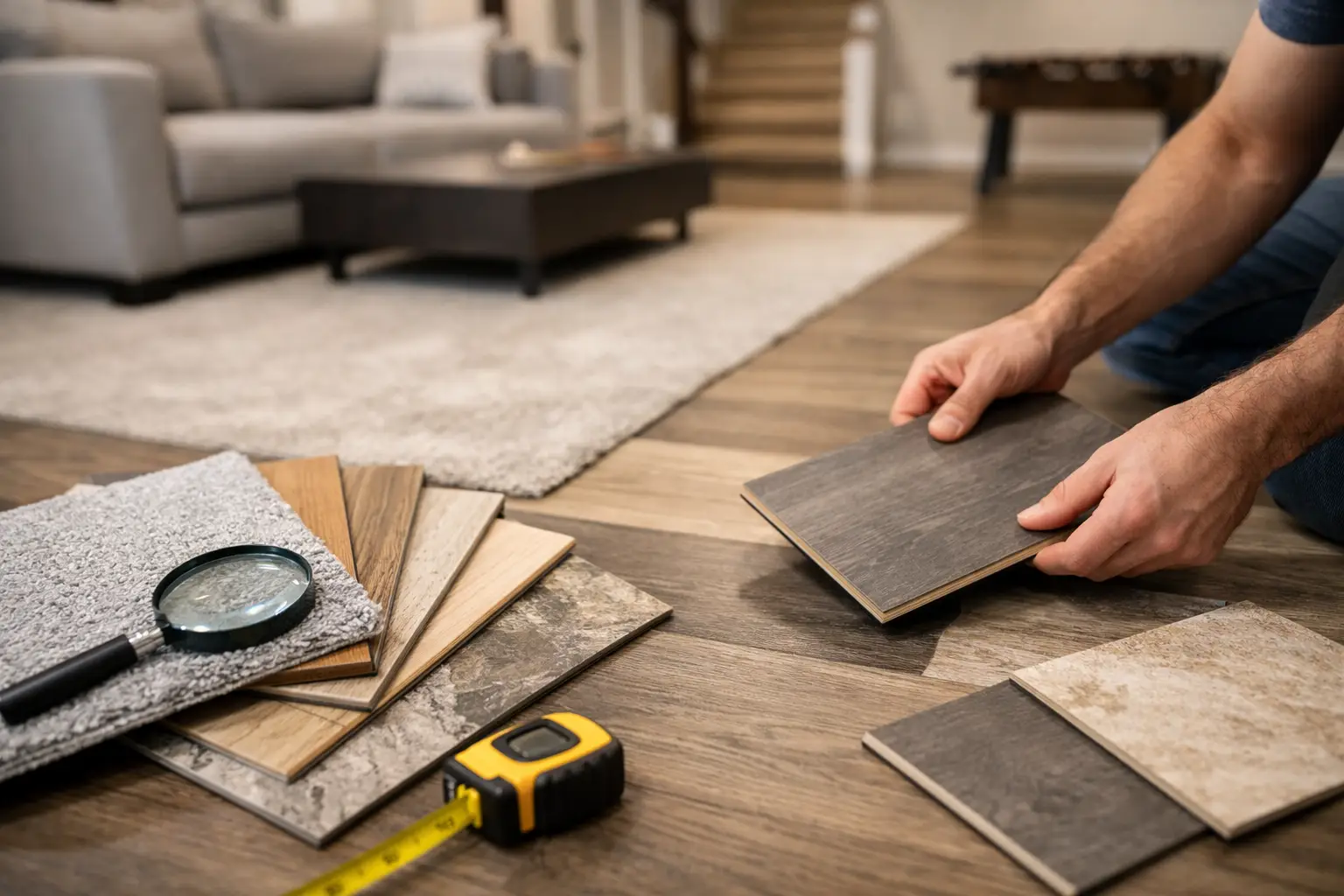
A flooring sample can help you picture the finished room, but it cannot reveal what the slab needs. That is why good basement remodeling begins with an on-site assessment and a plan that accounts for the entire space.
At JG Home Services, we help homeowners make those decisions with practical design guidance, detailed preparation, and professional installation. Choose a basement floor that fits your lifestyle, but make sure the system beneath it is built to protect your investment for years to come.