
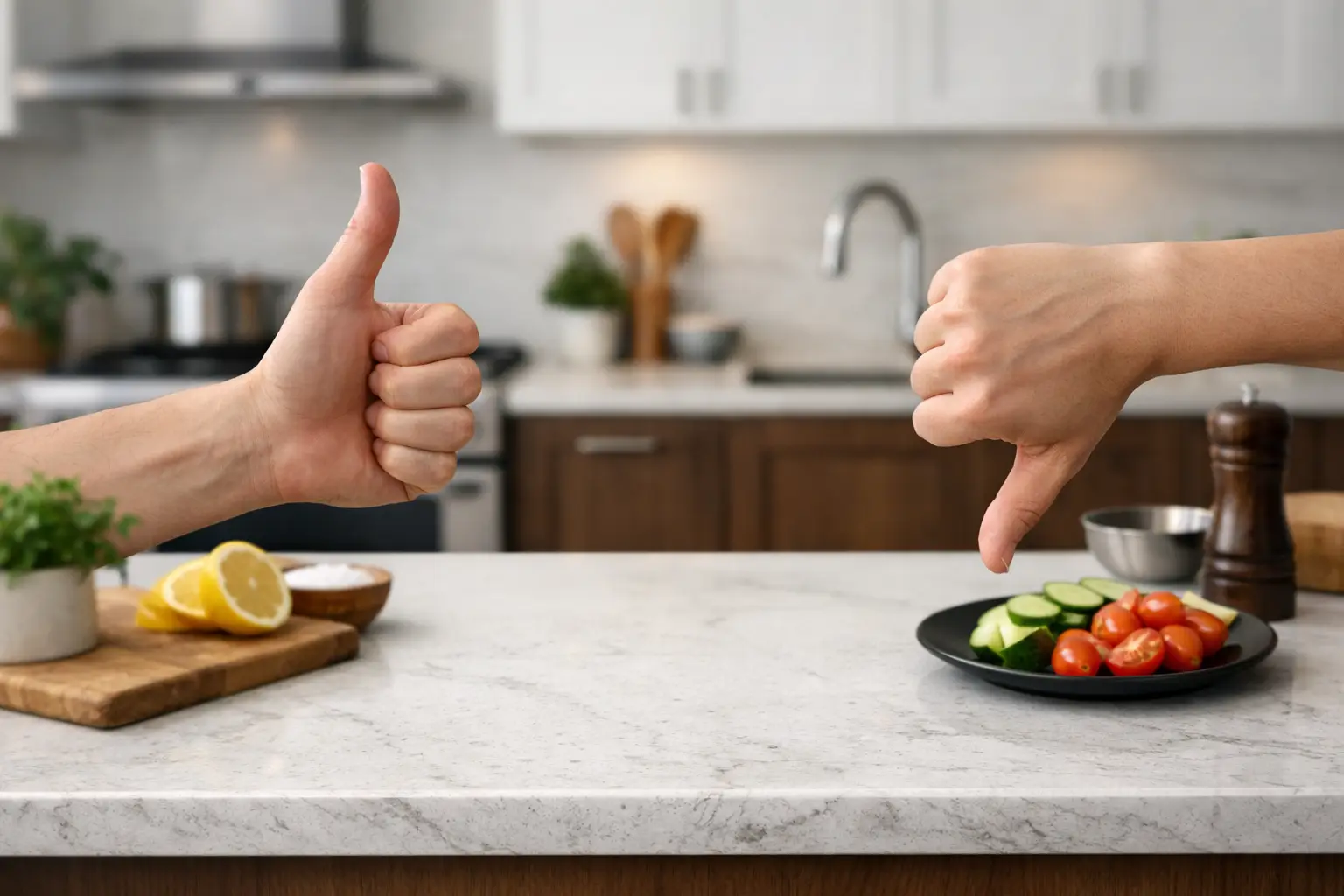
A new countertop has to do more than look good in a showroom. It needs to handle rushed breakfasts, homework at the island, hot serving dishes, spills, and years of daily use. If you searched for a “quartz countertops review kitchen,” you are probably deciding whether quartz is the right long-term surface for your remodel. For many suburban homeowners, it is an excellent choice – but it is not the best fit for every budget, layout, or cooking routine.
Quartz has become a leading kitchen countertop material because it offers a polished appearance with lower maintenance than many natural stones. The best decision comes from understanding where it performs well, where it has limits, and how the slab, edge detail, and installation will work with the rest of your kitchen.
Quartz Countertops Review for Kitchen Remodeling
Quartz countertops are engineered surfaces made primarily from ground natural quartz combined with resins, pigments, and binding materials. The result is a dense, nonporous slab available in a wide range of colors and patterns, from clean whites and soft concrete looks to bold marble-inspired veining.
That manufacturing process is the main reason quartz feels different from granite or marble. Natural stone varies from slab to slab, sometimes dramatically. Quartz is more controlled. Homeowners can generally expect a more consistent color and pattern, which is helpful when coordinating cabinets, backsplash tile, flooring, and paint.
For a kitchen remodel, quartz is especially appealing when the goal is an elevated finish without adding another maintenance task to the household routine. It does not require regular sealing, and its smooth surface is easy to wipe down after everyday cooking.
What homeowners tend to like most
The strongest advantage is easy care. Because quartz is nonporous, common kitchen spills such as coffee, juice, oil, and wine are less likely to soak into the surface than they are with unsealed natural stone. Routine cleaning usually requires a soft cloth, warm water, and a mild soap.
Quartz also offers dependable visual consistency. If you love the movement of marble but do not want to worry as much about etching from lemon juice or vinegar, a marble-look quartz can be a practical alternative. Modern designs have improved considerably, with warmer whites, subtle veining, and more natural-looking depth than many older quartz patterns.
Durability is another reason quartz works well in active family kitchens. It resists scratches better than many countertop options and stands up well to normal food preparation. A properly fabricated and installed quartz countertop can provide many years of reliable service while keeping its finished appearance.
The Trade-Offs to Consider Before Choosing Quartz
No countertop material is maintenance-free or indestructible. A trustworthy quartz countertops review should be clear about the limitations, especially before a homeowner commits to a full kitchen renovation.
Quartz is highly stain resistant, but it is not invulnerable. Strong dyes, permanent markers, harsh chemicals, and residue left on the surface can cause problems. Avoid oven cleaner, paint remover, drain cleaner, and abrasive scrub pads. For stubborn spots, use the cleaner recommended by the manufacturer rather than experimenting with aggressive products.
Heat is the biggest day-to-day concern. Quartz is heat resistant, not heatproof. Sudden or intense heat can damage the resin binders or leave discoloration, particularly near a cooktop. Always use trivets beneath hot pans, slow cookers, electric griddles, and baking dishes. This is a simple habit, but it matters.
Edges and corners also deserve care. The slab itself is durable, yet a hard hit from a heavy cast-iron pan can chip an edge. This is more likely around a sink cutout, overhang, or sharp profile. A slightly softened eased edge or rounded profile can be a smart choice for households with young children or high-traffic kitchens.
Finally, quartz is not usually the lowest-cost option. Material quality, slab size, pattern complexity, demolition, cutouts, edge profiles, and installation all affect the final price. Large islands, waterfall panels, multiple seams, and full-height backsplash applications can raise both material needs and fabrication labor.
How Quartz Compares With Other Kitchen Countertops
Quartz often lands in the middle-to-upper range of countertop investments, but price alone does not tell the full story. The right comparison is based on how you use your kitchen and what level of upkeep you are comfortable with.
Granite provides a natural, one-of-a-kind look and handles heat very well. It can be an excellent choice for homeowners who enjoy natural variation and do a lot of high-heat cooking. However, granite typically needs periodic sealing, and each slab should be selected in person because the movement and color can vary.
Marble delivers an unmatched classic appearance, especially in traditional, transitional, and European-inspired kitchens. It is also softer and more porous than quartz, which means it can scratch, stain, and etch. Some homeowners appreciate the patina marble develops over time. Others would find that wear frustrating.
Solid surface countertops offer a clean, integrated look and can often be repaired if scratched. They are generally less heat resistant and may not provide the same depth or premium appearance as quartz. Laminate remains a budget-conscious option with many attractive styles, but it does not offer the same long-term scratch, heat, or impact resistance.
For many homeowners, quartz is the balanced option: refined in appearance, simple to maintain, and well suited to a busy kitchen. But if you regularly place hot cookware directly on the counter, want the authenticity of natural stone, or are working within a tight budget, another material may serve you better.
Choosing the Right Quartz Slab and Finish
The color and pattern you choose will shape the entire room. Bright white quartz can make a smaller kitchen feel open, but a plain white surface may show crumbs, dark debris, and stains from heavily pigmented foods more readily. A warmer white, light gray, taupe, or softly patterned design can be more forgiving while still keeping the kitchen bright.
Large dramatic veins create an impressive focal point on an island, especially when the pattern continues up a full-height backsplash. They can also require more planning. Vein direction, seam placement, and matching across adjacent pieces should be discussed before fabrication begins. A beautiful slab can lose some of its effect if these details are left to chance.
Matte or honed quartz finishes offer a softer, less reflective appearance that works well with contemporary and organic-modern kitchens. Polished quartz reflects more light and can make a room feel crisper. Neither finish is automatically better; the choice depends on your cabinet color, lighting, and desired level of visual texture.
Bring cabinet door samples, backsplash selections, and flooring samples when viewing slabs. Showroom lighting can differ greatly from the light in your home. Looking at materials together helps prevent undertones from competing once the kitchen is complete.
Installation Details That Affect the Final Result
Even a high-quality quartz slab depends on accurate measuring, skilled fabrication, and careful installation. Countertops must be properly supported, especially at islands with seating overhangs. Large spans may require brackets or hidden steel support, depending on the cabinet layout and the thickness of the material.
Seams are another normal part of most countertop projects. Their location and visibility depend on the slab dimensions, kitchen layout, pattern, and installer planning. A qualified remodeling team will discuss likely seam locations early, rather than treating them as an afterthought once fabrication is underway.
Sink selection should be coordinated before countertops are templated. Undermount sinks are a popular pairing with quartz because they create a clean transition and make it easier to brush crumbs into the sink. Faucet holes, soap dispensers, filtered-water taps, and cooktop openings all need to be planned before the slab is cut.
This is where a full-service remodeler adds practical value. At JG Home Services, countertop choices are considered alongside cabinetry, plumbing fixtures, backsplash, lighting, and the way your family uses the room. That coordination helps protect the budget and avoids last-minute changes that can delay a project.
Is Quartz the Right Countertop for Your Kitchen?
Quartz is a strong choice if you want a durable, attractive surface with low routine maintenance and a consistent design. It performs especially well in kitchens where the counters are used constantly but homeowners do not want to reseal stone or worry about everyday spills.
It may be less suitable if you want a fully natural slab, frequently set very hot cookware directly on the counter, or need the least expensive material available. The right answer is not always the most popular material. It is the surface that fits your design, cooking habits, and investment goals.
Before making a final selection, view full slabs, ask how seams and overhangs will be handled, and consider the countertop as part of the whole kitchen rather than an isolated purchase. A well-planned quartz installation can make the room easier to live in every day while giving your remodel the finished, dependable look your home deserves.