
A bathroom can look finished on installation day and still disappoint six months later. Grout that stains too easily, flooring that feels cold or slick, and a vanity that swells near the sink are not small details when you use the room every morning. Choosing materials for bathroom remodel projects means selecting finishes that fit your household, stand up to moisture, and support the look you want for years to come.
The best choices are rarely about selecting the most expensive tile or the trendiest faucet. They come from understanding where water, wear, cleaning, and daily routines will put pressure on the room. A well-planned material package brings those practical needs together with a design that feels right for your home.
Start With How the Bathroom Will Be Used
A hall bathroom used by children needs different materials than a quiet primary bath. Before looking at samples, consider who uses the space, how often it is cleaned, and whether the room must handle wet towels, busy mornings, or a walk-in shower used every day.
For a family bathroom, easy-to-clean porcelain tile, durable quartz counters, and a vanity with a moisture-resistant finish often make sense. In a primary suite, homeowners may choose larger-format tile, a more decorative natural stone accent, or upgraded shower hardware. The right choice depends on whether you are prioritizing low maintenance, a spa-like feel, resale appeal, or all three.
It also helps to separate materials by their job. Flooring must be safe underfoot and tolerate moisture. Shower walls need reliable water protection. Countertops should resist cosmetics, soap, and daily cleaning. Cabinet materials need to handle humidity without warping. A finish that works beautifully in one area may not be the best fit somewhere else.
Choosing Materials for a Bathroom Remodel by Zone
Flooring: Choose Safety Before Style Alone
Bathroom flooring has to handle splashes, humidity, and frequent foot traffic. Porcelain tile remains a dependable option because it is water-resistant, durable, and available in styles that resemble stone, concrete, or wood. It is especially practical for full bathrooms and shower-adjacent areas.
Pay attention to tile texture and size. A polished tile can be attractive, but it may become slippery when wet. Matte or lightly textured finishes generally offer better traction. Very large tiles create a clean, modern look with fewer grout lines, but they may require more careful layout in a small room. Smaller tiles, including mosaic sheets, are often a strong choice for shower floors because the additional grout lines improve grip.
Luxury vinyl can work well in powder rooms or bathrooms with lower water exposure, particularly when comfort and budget are priorities. However, it should be installed with careful attention to seams, edges, and subfloor conditions. For a heavily used full bath, tile often offers stronger long-term performance.
Shower Walls and Pans: Build for Water First
A shower is not the place to compromise on preparation. The tile you see is only one part of the system. Proper waterproofing behind the tile, a correctly sloped shower pan, and detailed work around niches, corners, and plumbing penetrations matter just as much as the surface material.
Porcelain and ceramic tile are versatile choices for shower walls. Porcelain is denser and less absorbent, making it an excellent option for wet areas. Large-format tile creates a more continuous appearance and reduces the amount of grout to clean. On the other hand, it demands precise installation, especially where walls are not perfectly square.
Natural stone can create a distinctive, high-end shower, but it asks more of the homeowner. Many stone materials require sealing and can be more sensitive to cleaners, water minerals, and staining. If you love the look of marble, use it with clear expectations about maintenance and natural variation. For many busy households, a marble-look porcelain tile provides a similar visual effect with less upkeep.
For shower floors, select small porcelain mosaics or another rated slip-resistant surface. The material must also work with the slope toward the drain. A good shower should feel solid, drain efficiently, and be easy to clean without becoming a constant maintenance project.
Vanity Cabinets: Look Beyond the Door Style
Vanities face humidity, spills, and repeated contact with water around the sink. Solid wood can be a beautiful option, but it needs a quality finish and appropriate ventilation. Plywood construction is often a stronger choice than lower-grade particleboard for cabinet boxes because it holds up better in damp conditions.
The finish matters as much as the cabinet material. Painted, stained, and laminate finishes all have a place, but they should be selected for durability and cleanability. If storage is limited, a well-designed vanity with drawers can be more useful than a larger cabinet with deep, hard-to-reach shelves. Consider where hair tools, towels, toiletries, and cleaning supplies will actually go before finalizing the layout.
Floating vanities make a smaller bathroom feel more open and simplify floor cleaning. Furniture-style vanities add warmth and can give a traditional home more character. Either can perform well when properly sized and installed.
Countertops: Balance Appearance and Maintenance
Quartz is one of the most practical bathroom countertop materials. It offers a consistent look, resists staining, and does not require routine sealing. It works well with both classic and contemporary designs, from soft white surfaces to bolder veining.
Granite and natural marble offer natural movement that cannot be duplicated exactly, but they may require periodic sealing and more careful cleaning. Solid-surface countertops offer another low-maintenance option and can create a clean, integrated look. The best choice comes down to the appearance you prefer and the amount of care you are comfortable providing.
Do not overlook the sink and faucet pairing. An undermount sink makes countertop cleanup easier, while a vessel sink creates a more decorative focal point but may require extra attention around its base. Choose faucet finishes with realistic expectations as well. Brushed nickel and chrome tend to hide water spots more easily than darker or highly polished finishes.
Keep Grout, Caulk, and Hardware in the Plan
Small finish decisions can have a large effect on how a bathroom ages. Grout color changes the entire look of tile. A close match creates a quieter, more continuous surface, while contrasting grout highlights the tile pattern. Mid-tone grout often hides everyday discoloration better than bright white, especially on floors and shower pans.
Grout type is equally important. High-performance grout products can offer better stain and moisture resistance than traditional options. Caulk belongs at changes of plane, such as where a wall meets a tub or shower base, because those areas experience movement. Using the right materials in the right locations helps prevent cracks and water intrusion.
Hardware should feel coordinated, not necessarily identical. Matching the faucet, shower trim, cabinet pulls, towel bars, and lighting creates a polished result, but a controlled mix of finishes can work when it is intentional. The key is limiting the palette so the room does not feel pieced together.
Set a Budget That Protects the Parts You Cannot See
A bathroom remodeling budget should cover more than visible finishes. Waterproofing, subfloor repair, plumbing updates, ventilation, electrical work, and skilled installation protect the investment long after the new tile is in place.
If you need to make trade-offs, avoid reducing quality in the shower system, flooring installation, plumbing fixtures, or cabinet construction. You can often adjust a design through tile layout, accent placement, standard-size materials, or a more economical vanity top without sacrificing the room’s long-term performance.
Ordering all materials before demolition begins also helps prevent delays and rushed substitutions. Confirm lead times, inspect tile and fixtures when they arrive, and purchase enough tile for cuts, waste, and future repairs. A professional remodeler can help coordinate these details so selections support the project schedule and budget.
See Materials Together Before You Commit
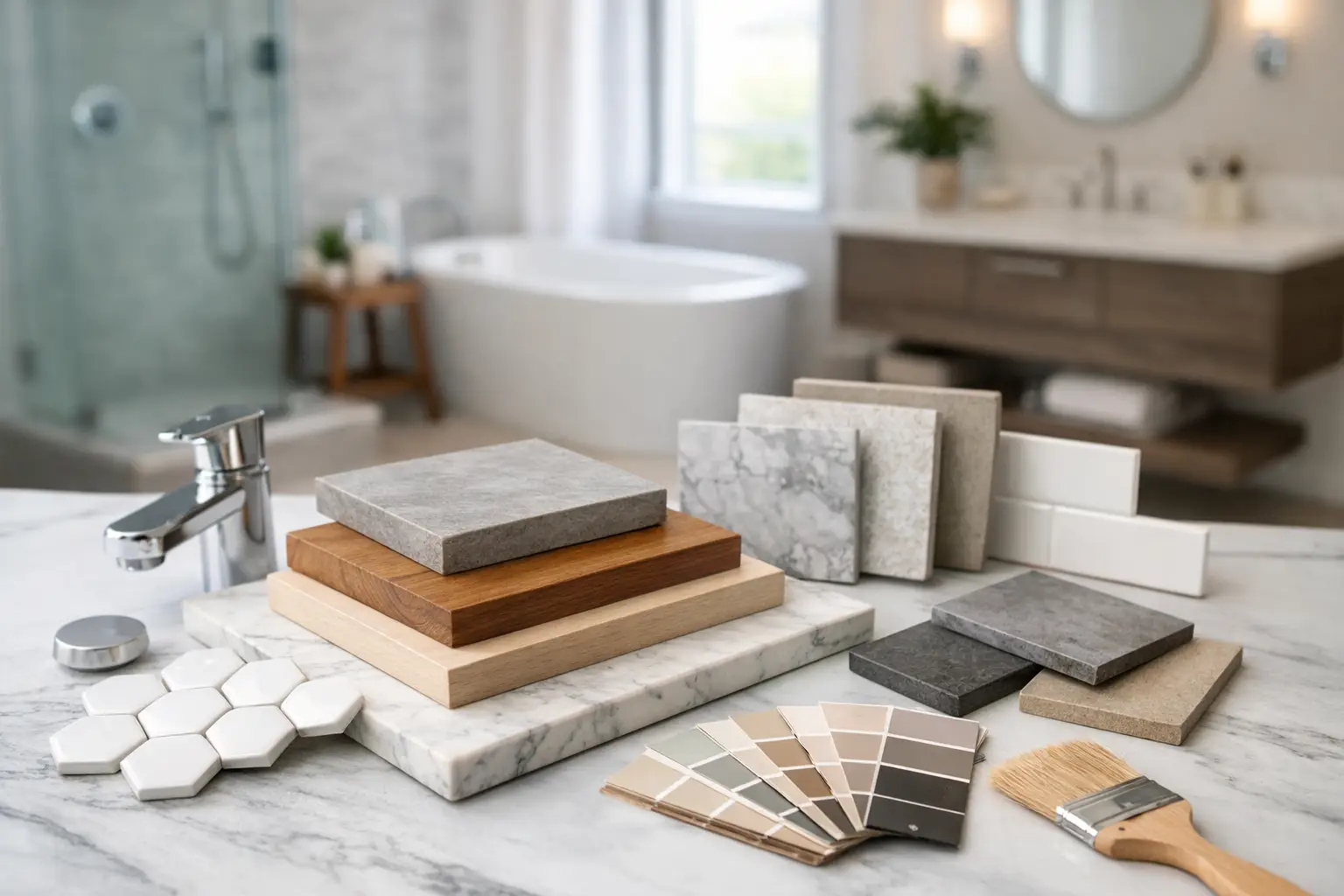
A tile sample under showroom lighting can look very different in your bathroom. Bring samples home and view them near the vanity, paint color, and existing trim at different times of day. Look at undertones carefully: a white tile may read warm, cool, gray, cream, or bright depending on the surrounding materials.
Keep the larger surfaces calm and use accents with purpose. Flooring, wall tile, vanity color, and countertops all compete for attention when each has a strong pattern. Often, the most lasting bathrooms use one primary material, one supporting finish, and a limited accent that adds personality without overwhelming the space.
A thoughtful material plan turns a bathroom from a collection of attractive products into a room that works hard every day. JG Home Services can help homeowners weigh those choices, coordinate the details, and move forward with confidence from design through installation.