
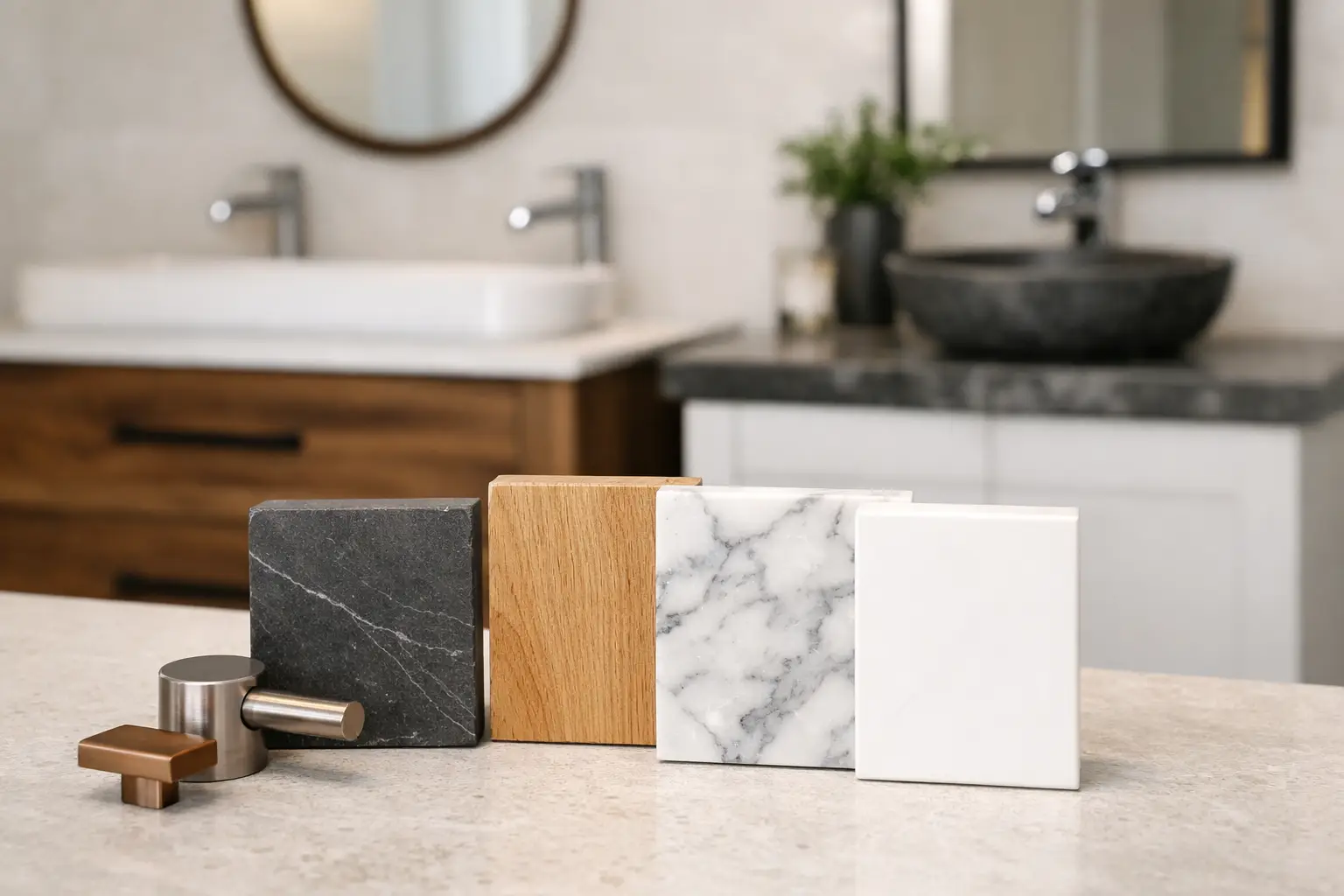
A bathroom vanity has to do more than look good on installation day. It needs to handle steam after hot showers, splashes around the sink, daily cleaning, and years of opening and closing drawers. That is why choosing the best bathroom vanity materials matters as much as selecting the right size, layout, and finish.
For most homeowners, the right choice is not simply the most expensive material. It is the one that fits the bathroom’s moisture level, how the space is used, the desired style, and the remodeling budget. A well-built vanity with the right materials can make a bathroom feel finished, organized, and built to last.
Start by Separating Cabinet and Countertop Materials
A vanity is made of two major components: the cabinet or base and the countertop. These materials perform different jobs, so they should be evaluated separately.
The cabinet needs to resist humidity, support plumbing, hold stored items, and remain stable over time. The countertop needs to stand up to water, soap, cosmetics, and regular cleaning. A strong vanity design often pairs a moisture-resistant cabinet construction with a durable, low-maintenance top.
For example, a painted plywood vanity with a quartz countertop is a very different investment from a particleboard vanity with a cultured marble top. Both can work in the right setting, but their expected lifespan, appearance, and maintenance needs are not the same.
Best Bathroom Vanity Cabinet Materials
Solid Wood
Solid wood is a classic choice for homeowners who want warmth, character, and a high-end furniture-style look. Oak, maple, birch, walnut, and alder are common options. When properly sealed and finished, solid wood can provide excellent strength and a timeless appearance.
The trade-off is movement. Wood naturally expands and contracts as humidity changes, which is especially relevant in a bathroom. Quality construction, proper sealing, and reliable ventilation help reduce the risk of warping or cracking. Solid wood is often a strong option for a primary bathroom or powder room where style and long-term value are priorities.
Not every vanity labeled “wood” is solid wood throughout. Many quality vanities use solid wood frames and doors with engineered wood panels. That can be a practical combination when the materials are well made and protected from moisture.
Plywood
Plywood is one of the most dependable materials for vanity boxes and cabinet sides. It is built from multiple layers of wood veneer bonded together, giving it more stability than many lower-cost engineered materials. Quality plywood resists sagging, holds screws well, and performs reliably in humid environments when its edges are sealed.
For many bathroom remodels, plywood offers an excellent balance of durability, cost, and moisture resistance. It is particularly well suited for a busy family bathroom where drawers are used heavily and the vanity will see frequent splashes.
Look for furniture-grade or cabinet-grade plywood rather than thin, low-quality panels. The thickness of the cabinet box, the quality of the joinery, and the finish on exposed edges all affect how well the vanity will perform.
MDF
Medium-density fiberboard, commonly called MDF, is made from fine wood fibers compressed with resin. It has a very smooth surface, making it a popular material for painted vanity doors and detailed profiles. If you want a crisp white shaker vanity or a smooth modern painted finish, MDF can create a clean, consistent look.
Its main weakness is water exposure. MDF can swell when moisture reaches an unfinished edge, seam, or damaged painted surface. It can still be a good choice in a well-ventilated bathroom, particularly for doors and drawer fronts, but it needs a durable factory finish and careful installation around plumbing and sink cutouts.
MDF is best treated as a finish-focused material rather than a water-resistant one. In a bathroom used by children or one with limited ventilation, plywood construction is often the safer investment for the cabinet box.
Particleboard
Particleboard is typically the most budget-friendly cabinet material. It is made from wood particles pressed together with resin and often covered with laminate, veneer, or thermofoil. It can look attractive at first, especially in stock vanity lines, but it is less forgiving when exposed to leaks or standing water.
Once particleboard swells, it rarely returns to its original shape. The bottom of a vanity, the area around supply lines, and corners near wet floors are common trouble spots. A quality laminate finish can offer some protection, but it does not make particleboard waterproof.
Particleboard may make sense for a lightly used powder room or a short-term update with a limited budget. For a primary or family bathroom, spending more for plywood or a solid-wood construction usually provides better long-term value.
Thermofoil and Laminate Finishes
Thermofoil and laminate are finishes applied over an engineered core, often MDF or particleboard. Thermofoil uses a vinyl layer heat-bonded to the substrate, while laminate is a durable decorative surface bonded to the panel. Both can offer a wide range of colors and wood-look styles at a manageable price point.
Laminate generally holds up well to everyday wear and is easy to clean. Thermofoil provides a smooth, uniform appearance, but the finish can peel if it is exposed to excessive heat, moisture, or edge damage. The quality of the core material remains important. A durable laminate over plywood will usually outlast the same finish over low-grade particleboard.
Best Countertop Materials for Bathroom Vanities
Quartz
Quartz is a leading countertop option for bathroom vanities because it is nonporous, durable, and easy to maintain. It resists staining from toothpaste, makeup, soap, and most common bathroom products. It also comes in a broad range of colors and patterns, including looks that resemble natural marble.
Quartz does not require routine sealing, making it a practical choice for homeowners who want a polished appearance without added maintenance. It costs more than basic vanity tops, but its durability and clean finish often justify the investment in a primary bathroom.
Natural Stone
Marble, granite, and other natural stones bring distinct character that manufactured materials cannot fully duplicate. Each slab has natural variation, which can make the vanity feel one of a kind. Granite is generally more durable than marble, while marble is prized for its elegant veining and softer appearance.
Natural stone requires more care than quartz. Depending on the stone, periodic sealing may be needed to help prevent staining and moisture absorption. Marble can etch from acidic products and show wear over time. For homeowners who appreciate a lived-in, natural finish, that patina can be part of the appeal. For a low-maintenance household, quartz may be the better fit.
Cultured Marble
Cultured marble is a manufactured vanity top made from crushed stone and resin with a protective gel coat. It is commonly molded with an integrated sink, creating fewer seams where water and debris can collect. This makes it a cost-effective and practical choice for many bathroom renovations.
It is available in a range of colors and tends to be easier on the budget than quartz or natural stone. The surface can scratch or dull over time, however, and deep damage is harder to repair. Cultured marble works well when an integrated sink and straightforward maintenance are more important than the look of a premium slab material.
Solid Surface
Solid-surface materials offer a smooth, nonporous finish and can also be fabricated with integrated sinks. They are easy to clean and can often be repaired if minor scratches or burns occur. Their uniform appearance works especially well in contemporary bathrooms.
Compared with quartz, solid surface is softer and more susceptible to scratching. Still, it is a reliable mid-range option for homeowners who want a clean, low-maintenance vanity top without the visual variation of natural stone.
How to Choose the Right Material Combination
The best material combination depends on how the bathroom is used. A powder room typically sees less steam and less daily wear, so it may be a good place to use a budget-conscious vanity with laminate finishes. A primary bathroom needs more protection, especially if it has a shower, tub, or limited exhaust ventilation.
For a busy family bathroom, prioritize moisture-resistant construction over decorative details. A plywood cabinet box, durable drawer hardware, and a quartz or solid-surface top are a practical combination. If the goal is a more traditional or custom look, solid wood doors with a properly sealed cabinet base can add character without giving up performance.
Also consider the vanity’s location. A cabinet placed directly beside a tub or shower needs stronger protection than one in a dry guest bathroom. Even the best materials can fail if a plumbing leak goes unnoticed, so proper installation and access to shutoff valves are part of protecting the investment.
Details That Matter Beyond the Material
Material selection is only one part of a long-lasting vanity. Look for full-extension drawers, soft-close hardware, sturdy drawer boxes, and sealed interiors. Check that the sink and countertop are properly supported, especially with heavy stone tops.
Good ventilation also protects the vanity. Run the bathroom exhaust fan during showers and for a period afterward to reduce humidity. Wipe standing water from countertop seams and cabinet edges, and address drips under the sink quickly.
At JG Home Services, we help homeowners compare vanity options as part of the full bathroom remodeling process, from design and material selection through professional installation. The goal is not to push one material for every project. It is to build a bathroom that fits how your family lives and stays on time and on budget.
A vanity should give you confidence every morning, not create another maintenance concern. Choose materials that match the demands of the room, protect them with proper ventilation and installation, and you will have a bathroom centerpiece that continues to look and perform well for years.