
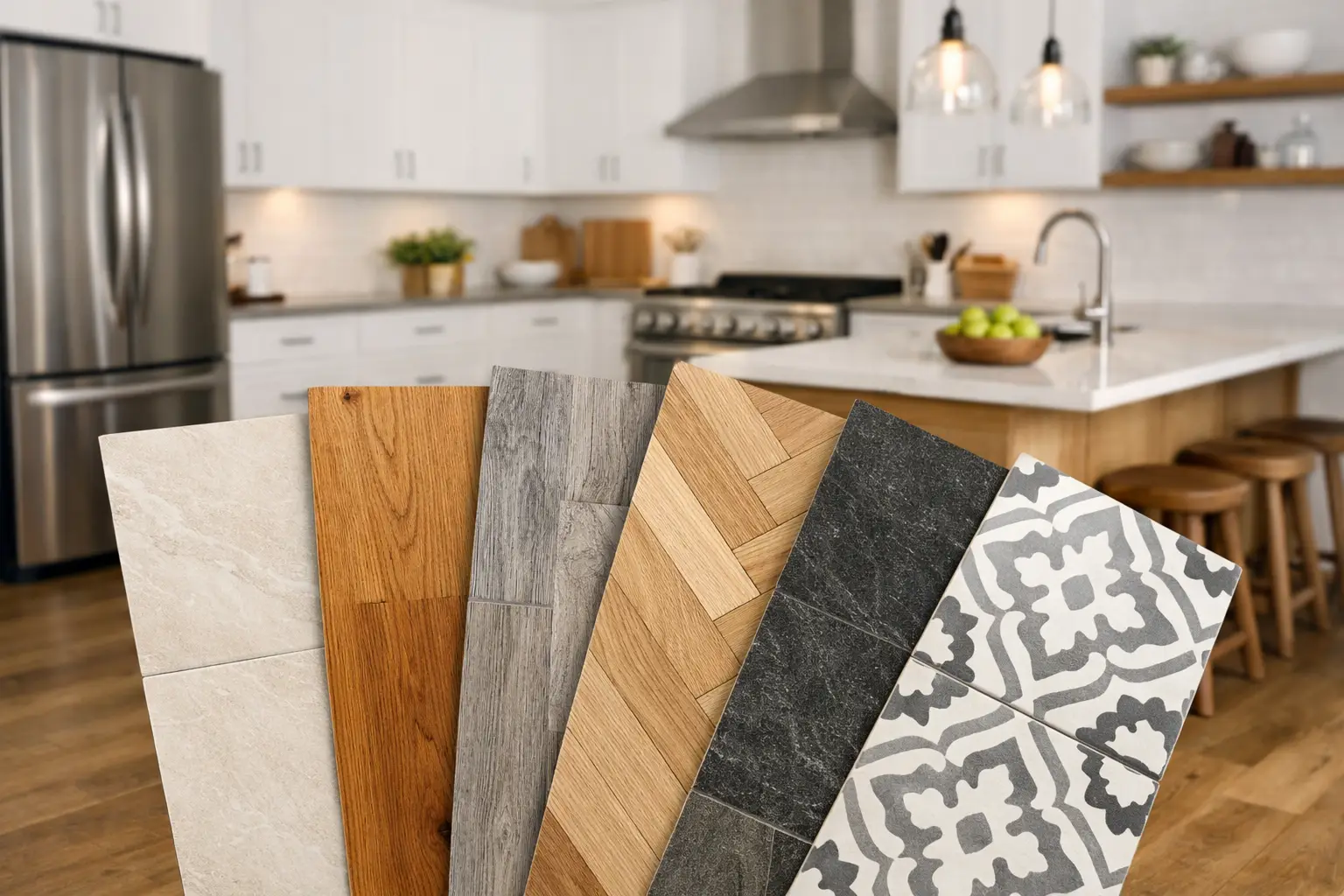
A kitchen floor has to handle more than its share of real life: dropped pans, wet shoes, pet nails, chair legs, cooking spills, and the daily traffic that comes with a busy home. That is why choosing the best kitchen flooring for remodel projects is not simply a color decision. It is a decision about how your kitchen will feel, perform, and hold up for years after the renovation is complete.
The right choice depends on your household, the condition of your subfloor, your budget, and the look you want for the entire space. A beautiful material that is difficult to maintain may not suit a family kitchen. On the other hand, a highly durable floor can still feel warm, welcoming, and tailored to your home when it is selected and installed with care.
What a Kitchen Floor Needs to Do
Kitchen flooring should stand up to moisture, wear, and frequent cleaning without making the room feel cold or disconnected from the rest of your home. It should also work with your cabinet layout, countertop selection, appliances, and transitions into nearby rooms.
Before comparing materials, think about how the kitchen is used. Families who cook most nights may prioritize water resistance and easy cleanup. Homeowners opening a kitchen to a living or dining area may place more emphasis on visual continuity. If anyone in the household has mobility concerns, slip resistance and a forgiving surface underfoot deserve added attention.
Subfloor preparation matters just as much as the flooring itself. An uneven or damaged subfloor can lead to cracked grout, hollow spots, movement, and premature wear. A professional remodel plan accounts for floor height, appliance clearance, and clean transitions before installation begins, rather than treating those details as last-minute adjustments.
Best Kitchen Flooring for Remodel Projects
Porcelain or Ceramic Tile
Tile remains one of the strongest choices for kitchens because it resists water, stains, and everyday wear exceptionally well. Porcelain is especially dense and durable, making it a practical option for active households. It is available in finishes that resemble wood, stone, concrete, and more traditional tile, so homeowners have plenty of design flexibility.
The trade-off is comfort. Tile can feel hard and cool underfoot, particularly during Midwest winters. Area rugs, anti-fatigue mats near the sink, and radiant floor heating can make a noticeable difference. Tile installation also requires a stable, properly prepared surface. When the substrate is not right, even quality tile can crack over time.
For homeowners who want a long-lasting floor with a clean, timeless look, porcelain tile is often one of the safest investments in a kitchen remodel.
Luxury Vinyl Plank or Tile
Luxury vinyl plank, often called LVP, has become a popular kitchen flooring option for good reason. It is water-resistant or waterproof depending on the product, comfortable underfoot, and available in convincing wood and stone visuals. It also tends to cost less than hardwood or high-end tile while offering a durable surface for families and pets.
LVP can be particularly useful when you want the appearance of wood flooring throughout an open-concept main level but need better moisture protection in the kitchen. It is generally quieter and warmer than tile, and damaged individual planks may be replaceable in certain systems.
Not all vinyl products perform the same way. Thickness, wear-layer quality, locking system, and installation method all affect durability. Lower-grade material can dent, fade, or show wear sooner than expected. Selecting a proven product and preparing the floor correctly are key to getting the value homeowners expect.
Engineered Hardwood
For many homeowners, real wood brings a level of warmth and character that other materials cannot duplicate. Engineered hardwood uses a genuine hardwood top layer over a layered core, which gives it better dimensional stability than solid hardwood. This makes it a more practical wood-flooring choice for many kitchens, especially when it will continue into adjoining rooms.
Engineered hardwood is not waterproof. Spills should be wiped up promptly, and standing water can still cause damage. However, a quality engineered floor with a durable finish can perform very well in a kitchen that receives normal care.
This option works best for homeowners who value natural material, visual continuity, and a refined finish. It may not be the first choice for a kitchen with frequent large spills, multiple pets, or young children who are hard on every surface, but it can be an excellent fit for the right household.
Solid Hardwood
Solid hardwood offers enduring appeal and can be refinished more times than engineered products. It adds warmth, supports resale appeal, and develops a natural patina that many homeowners appreciate. In a carefully planned kitchen, hardwood can create a classic, cohesive look that feels at home for decades.
Still, wood and water require attention. Solid hardwood expands and contracts with changes in humidity, and repeated moisture exposure can lead to cupping, gaps, or staining. It is generally better suited to homeowners who are comfortable maintaining it and who want it to match existing hardwood in nearby spaces.
A contractor should evaluate the existing floor structure, moisture conditions, and transition details before recommending solid hardwood. In some remodels, preserving or extending existing hardwood is the right move. In others, engineered wood or a wood-look alternative provides better day-to-day protection.
Natural Stone
Natural stone can give a kitchen an upscale, distinctive finish. Materials such as slate, travertine, marble, and limestone each have their own color variation and texture, which means no two floors look exactly alike. Stone is a strong design choice for homeowners who want a custom, high-end result.
The maintenance requirements are higher than with porcelain tile. Many stone floors need regular sealing to help prevent staining, and softer stones can scratch or etch. Some polished surfaces may also become slippery when wet. A honed finish or naturally textured stone can provide better traction in a kitchen.
Stone is best selected with clear expectations. It delivers character and visual impact, but it is not a maintenance-free material. The right sealer, finish, and installation approach help protect the investment.
Sheet Vinyl
Sheet vinyl is often overlooked, yet it can be a smart solution for kitchens where budget, comfort, and water resistance are top priorities. Because it comes in large sheets with few seams, it offers excellent protection against spills. Modern designs can also look far more polished than many homeowners expect.
It is softer and warmer than tile, easy to clean, and typically more affordable than other flooring types. The main limitation is that it can be punctured or gouged by sharp objects, and repairing a damaged area may be less straightforward than replacing a single plank or tile.
For a practical family kitchen or a remodel that needs to keep costs under control without sacrificing a finished look, sheet vinyl deserves consideration.
How to Make the Right Choice for Your Home
The best material on paper is not always the best floor for your kitchen. Start with performance, then narrow the options based on style. If water resistance is your top concern, porcelain tile, luxury vinyl, and sheet vinyl should lead the conversation. If you want a natural, connected look through an open floor plan, engineered or solid hardwood may be worth the added care.
Budget should include more than the price per square foot. Removal of old flooring, subfloor repairs, underlayment, trim work, transitions, and installation all affect the final project cost. A lower-priced material can become expensive if the floor beneath it needs significant correction. Conversely, a higher-quality product may offer better long-term value when installed properly.
It also helps to bring samples home. Look at them against your cabinets and countertops in morning light, evening light, and under your kitchen lighting. Pay attention to texture, grout color, plank width, and whether the floor complements the rooms that connect to the kitchen.
Professional Installation Protects the Finish
Flooring is one of the largest visual surfaces in a kitchen, and small installation details are easy to notice. Uneven tile lines, poorly planned transitions, loose planks, and gaps around cabinets can distract from an otherwise beautiful remodel.
A full-service remodeling team can coordinate flooring with cabinetry, appliance placement, lighting, and the overall construction schedule. At JG Home Services, that level of planning helps homeowners make confident material decisions while keeping the project focused on workmanship, communication, and a finished kitchen that functions as well as it looks.
Your kitchen should not require you to choose between style and everyday practicality. Choose a floor that fits the way your family actually lives, then give it the careful preparation and installation that will let it perform with confidence for years to come.