
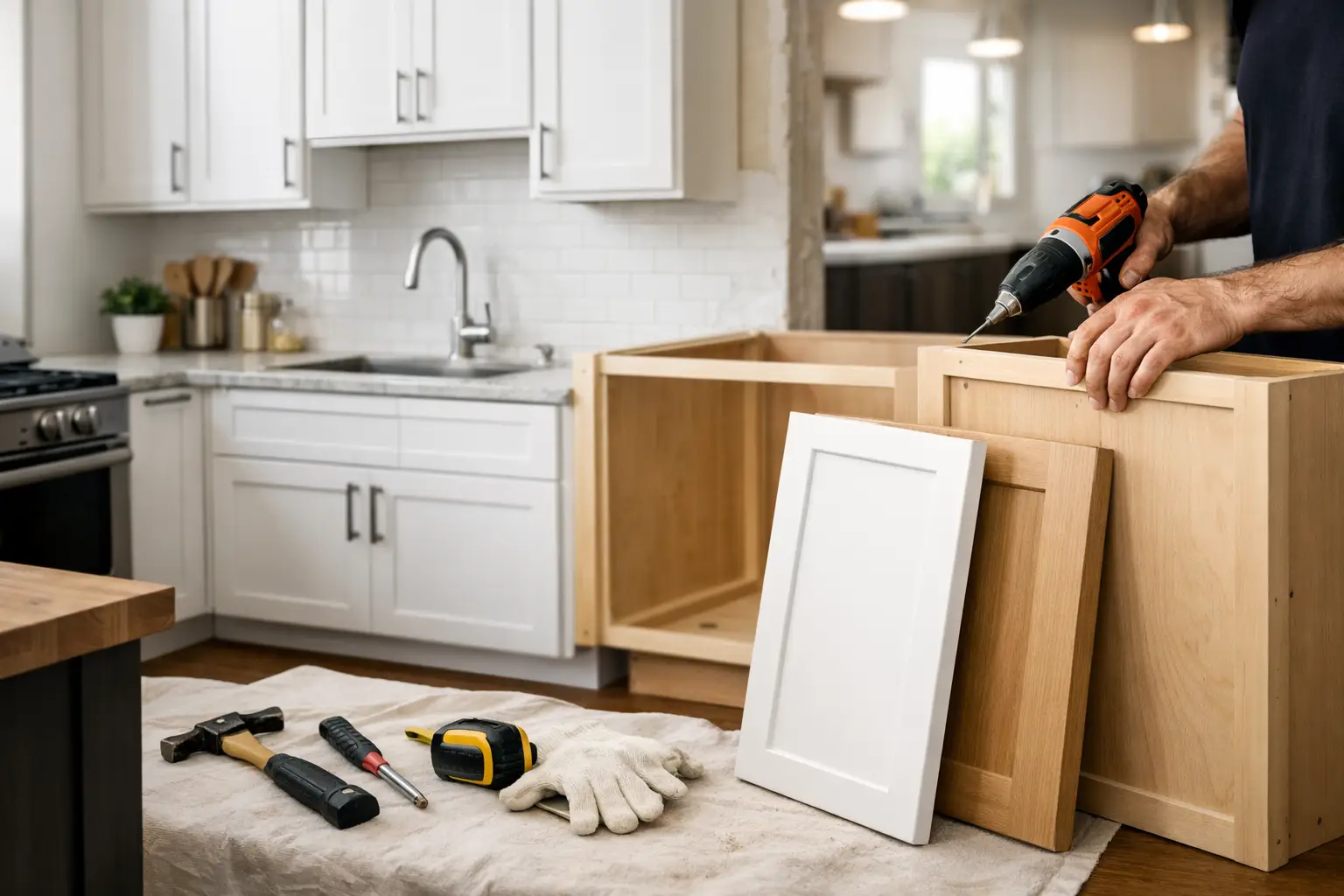
A kitchen starts to feel dated long before it stops working. Doors sag, drawers stick, finishes wear down, and the layout that once seemed fine starts getting in the way of daily life. If that sounds familiar, this kitchen cabinet replacement guide will help you understand when replacement makes sense, what choices matter most, and how to plan the project without unnecessary stress.
Cabinet replacement is one of the most visible upgrades you can make in a kitchen, but it is not just about appearance. New cabinets can improve storage, workflow, lighting, durability, and the overall value of your home. The right plan gives you a kitchen that looks better and works better every day.
When cabinet replacement is the right move
Not every kitchen needs a full cabinet replacement. In some cases, repainting or refacing can give you a fresh look for less. But if your cabinet boxes are damaged, your layout is inefficient, or your storage no longer fits the way your family uses the space, replacement is often the smarter long-term investment.
Water damage is a common reason to replace cabinets. Swollen particleboard, soft spots around the sink base, and warped doors usually point to more than a cosmetic issue. Structural wear is another red flag. If drawers no longer close properly, shelves are bowing, or hinges keep pulling loose, repairs can become a temporary patch rather than a real solution.
Layout changes are another major reason homeowners replace cabinets. If you want to add an island, improve traffic flow, create better prep space, or open the kitchen to an adjoining room, existing cabinets often limit what is possible. Replacement gives you the freedom to redesign the room around how you actually live.
Kitchen cabinet replacement guide: start with the layout
Before you think about color or door style, look at how the kitchen functions. This is where many homeowners make the biggest gains. A beautiful cabinet finish will not fix a cramped cooking zone or wasted corner storage.
Think about your daily routine. Where do groceries land when you come in? Is there enough prep space near the range? Are dishes stored close to the dishwasher? Small layout improvements can make a kitchen feel dramatically more comfortable.
This is also the stage to decide whether you want to keep the current footprint or rework it. Keeping plumbing and major appliance locations in place can help control cost. Moving them can create a better kitchen, but it usually adds labor, time, and complexity. There is no universal right answer. It depends on your goals, your budget, and how long you plan to stay in the home.
Choosing the right cabinet construction
Cabinets vary widely in quality, and the difference is not always obvious from a showroom sample. What matters most is how they are built and how they will hold up over time.
Solid wood doors are a popular choice because they offer durability and a classic look. Plywood cabinet boxes generally perform better than particleboard in areas where moisture is a concern. Soft-close hinges and drawer glides are worth serious consideration because they improve the daily feel of the kitchen and reduce wear over time.
You will also choose between stock, semi-custom, and custom cabinets. Stock cabinets are usually the most budget-friendly, but sizes and styles are more limited. Semi-custom cabinets offer more flexibility in dimensions, finishes, and storage features. Custom cabinets provide the most design freedom, especially in older homes where walls are not perfectly square or standard sizing leaves awkward gaps.
For many homeowners, semi-custom is the balance point. It allows for better fit and function without pushing the project into a fully custom price range.
Style matters, but function matters longer
It is easy to focus on door profiles, paint colors, and hardware finishes because those decisions are visible and exciting. They matter, but storage features often have a bigger impact on day-to-day satisfaction.
Deep drawers for pots and pans, roll-out trays, trash pull-outs, tray dividers, spice storage, and pantry organization can make a kitchen easier to use from the first day. If you have struggled with cluttered countertops or hard-to-reach lower cabinets, these upgrades are not extras. They are practical improvements.
In terms of style, most homeowners do best with choices that feel current without being overly trendy. Shaker-style doors remain popular because they work with traditional, transitional, and modern kitchens. Painted finishes create a bright, clean look, while stained wood adds warmth and character. Hardware can shift the look significantly, so it is worth selecting with the full design in mind, not as an afterthought.
What cabinet replacement really costs
Cabinet replacement can be a significant investment, and cost depends on more than the number of cabinets. Materials, construction quality, layout changes, finish selections, hardware, countertop coordination, and installation complexity all affect the final price.
If you are replacing cabinets only, the budget may be more manageable than a full kitchen remodel. But many cabinet projects also involve countertops, backsplash, flooring adjustments, lighting updates, or drywall and trim work. Once old cabinets come out, hidden issues such as wall damage or out-of-level floors can also come into play.
That is why clear planning and a detailed estimate matter. A low initial number can look attractive, but if it does not account for installation details, material allowances, or finish work, it may not reflect the real project cost. Homeowners usually feel more confident when they understand what is included, what could change, and where the budget has flexibility.
Kitchen cabinet replacement guide: timeline and project flow
One of the most common questions homeowners ask is how long cabinet replacement takes. The answer depends on the scope. A straightforward replacement in the same footprint can move faster than a project that includes design changes, electrical updates, plumbing relocation, and new finishes throughout the room.
The process usually starts with consultation and measurements, followed by design selections and ordering. Cabinet lead times can vary based on product line and customization. Once materials arrive, demolition and installation begin. After cabinets are set, countertops are typically templated and installed later, which can create a short gap between phases.
This is where professional project management makes a difference. Good scheduling keeps trades coordinated, reduces downtime, and helps the project stay on time and on budget. For homeowners, that means fewer surprises and a clearer path from planning to completion.
Why installation quality is just as important as cabinet quality
Even well-made cabinets can look and perform poorly if they are not installed correctly. Uneven reveals, misaligned doors, weak fastening, poor trim work, and rushed finishing details can undermine the entire investment.
Professional installation is about more than setting boxes against a wall. It includes correcting for uneven floors, scribing fillers properly, aligning doors and drawers, securing cabinets safely, and making sure the final result looks built for the space rather than forced into it.
This is also why full-service remodeling support matters. When one team handles design guidance, material coordination, installation, and finishing details, the project tends to move more smoothly. Homeowners are not left trying to manage multiple vendors or solve trade conflicts on their own.
How to prepare before the work starts
A cabinet project is easier when expectations are clear from the beginning. Before work starts, finalize your layout, materials, hardware, and finish selections as much as possible. Mid-project changes can affect budget and schedule quickly.
It also helps to plan for how your household will function during construction. If your kitchen will be out of service for a period of time, set up a temporary space with basic essentials. Think through where you will store dishes, small appliances, and pantry items. A little preparation makes the disruption much easier to manage.
Just as important, work with a contractor who communicates clearly. You should know the scope, the timeline, the payment schedule, and how change orders are handled. That level of transparency builds trust and gives homeowners confidence before the first cabinet is removed.
Making the right decision for your home
The best cabinet replacement plan is not always the biggest or most expensive one. It is the one that fits your home, your goals, and the way you use your kitchen every day. Some homeowners want a simple update with better storage and a cleaner look. Others are ready for a full redesign that transforms how the room functions.
What matters most is making decisions with the full picture in mind. Good cabinets should look right, fit right, and hold up to real life. Good planning should protect your budget, reduce stress, and keep the project moving. And good workmanship should be visible in every detail, from the layout to the final door adjustment.
For homeowners who want a smoother remodeling experience, working with an experienced team such as JG Home Services can make the process far more manageable. When design, materials, and installation are handled with care, cabinet replacement becomes more than a visual upgrade. It becomes a lasting improvement to how your home feels and functions every day.
If your kitchen no longer supports the way you live, replacing the cabinets may be the step that finally brings the whole room together.