
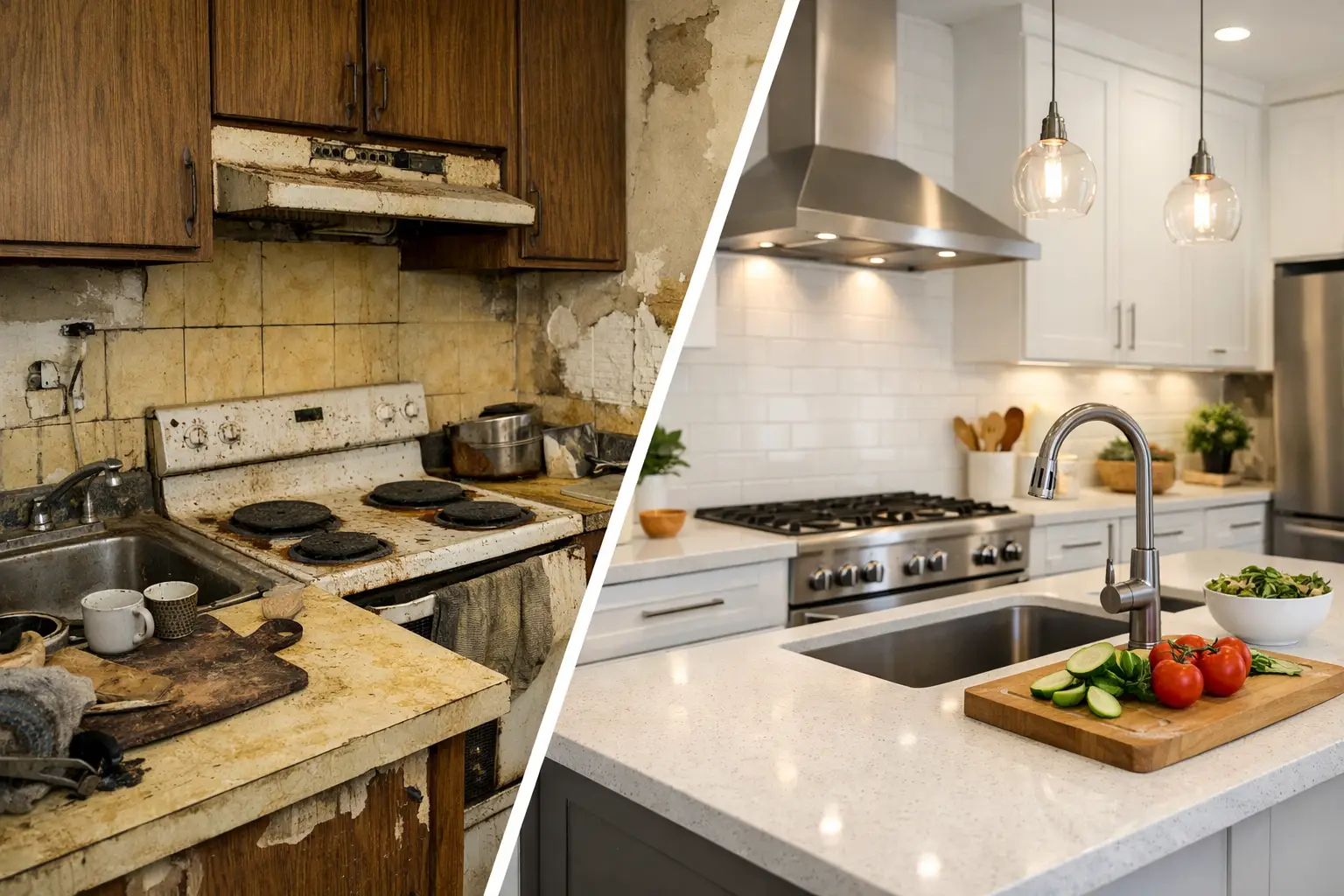
The kitchen tells you when it is no longer working. You feel it when dinner prep turns into a traffic jam, when a cabinet door will not stay closed, or when there is nowhere to put the groceries. The signs your kitchen needs remodeling are not always dramatic, but they tend to show up in the routines that should be easy.
A remodel is a meaningful investment, so not every dated finish calls for a full renovation. Sometimes new hardware, a fresh coat of paint, or better lighting can make a real difference. But when problems affect function, safety, storage, or the way your family uses the room, a well-planned kitchen remodel can improve daily life and protect your home’s value.
10 signs your kitchen needs remodeling
1. Your layout creates daily bottlenecks
A kitchen should support the way you cook, clean, gather, and move through the house. If someone loading the dishwasher blocks access to the refrigerator, or if two people cannot work in the room at once, the layout may be the issue rather than the size of the kitchen.
Older kitchens often separate the sink, range, refrigerator, and prep areas in ways that create extra steps and crowded corners. Remodeling can rework those zones with a better appliance layout, a larger work surface, or an island that adds seating without restricting traffic. The right solution depends on the room’s footprint and your household’s habits, not simply on following a trend.
2. Storage is always in short supply
Countertops covered in small appliances, pantry items, and mail are often a sign that the kitchen is not providing enough useful storage. Deep cabinets without organizers can waste space just as quickly as too few cabinets. Reaching into a dark base cabinet to find a pan is frustrating, especially when it happens every day.
A remodel creates the opportunity to add drawers, pull-out shelves, pantry storage, corner solutions, and cabinets sized for the items you actually own. Even a modest kitchen can feel calmer when every essential has a practical place.
3. Cabinets are damaged or no longer functioning well
Cabinets take a lot of use. Peeling finishes, water-swollen bases, loose hinges, broken drawers, and doors that do not align are more than cosmetic concerns. They can signal moisture damage or materials that have reached the end of their service life.
Refacing may be an option when cabinet boxes are structurally sound and the existing layout still works. If the boxes are damaged, storage is inadequate, or you want to change the layout, replacement cabinets are usually the better long-term choice. A professional assessment can help you avoid spending money on a surface fix that will not solve the underlying problem.
4. The countertops are worn, cracked, or difficult to maintain
Scratches, chips, burns, stains, and separated seams make a kitchen look tired, but they can also make food preparation harder. Some older surfaces are difficult to sanitize or require more maintenance than busy homeowners want to manage.
New countertops can improve both appearance and performance. Material selection matters here. Natural stone offers character but needs appropriate care, while engineered options can provide consistency and easier maintenance. The best choice is one that fits your cooking routine, budget, and expectations for upkeep.
5. Lighting leaves the room dark or shadowed
One ceiling fixture is rarely enough for a working kitchen. If you are chopping vegetables in your own shadow or struggling to see inside cabinets and pantry shelves, the room needs a better lighting plan.
A remodel can layer ambient, task, and accent lighting. Recessed fixtures can brighten the overall room, under-cabinet lighting improves prep areas, and pendants can define an island or dining space. Good lighting also makes finish colors more accurate and gives the kitchen a more welcoming feel after the workday ends.
6. Appliances no longer fit your needs or your space
Appliances that fail frequently are a clear reason to make a change. But even working appliances can reveal that a kitchen has fallen behind. A refrigerator that blocks a walkway when open, a range without enough landing space, or a dishwasher positioned far from the dish storage can make routine tasks unnecessarily difficult.
Planning appliances early is essential. Their sizes, door swings, ventilation needs, and utility connections affect cabinets, countertops, and clearances. A full-service remodeling team can coordinate those details before installation begins, helping prevent costly adjustments later in the project.
7. Moisture damage keeps returning
Water damage under the sink, soft flooring near the dishwasher, stained ceilings, or a persistent musty smell should not be ignored. A small leak can damage cabinet bases, subflooring, drywall, and nearby finishes before it becomes visible.
Repairing the source of the moisture comes first. Once that is addressed, remodeling can restore damaged materials and improve protection in high-use areas with durable flooring, properly installed backsplashes, and quality cabinetry. This is one situation where delaying the work can make a smaller repair turn into a larger project.
8. The kitchen feels disconnected from how your family lives
Many older kitchens were designed as closed-off workspaces. For some households, that arrangement still works well. For others, it leaves the person cooking separated from children doing homework, guests visiting, or family members gathered in the next room.
If you want more connection, a remodel may open sightlines, add seating, or create a more natural transition to adjacent living areas. Structural changes require careful planning, and opening a wall is not always necessary. Sometimes a revised peninsula, wider opening, or improved lighting creates the connection you want while staying within a more comfortable budget.
9. The style makes the entire home feel dated
A kitchen does not have to follow every design trend to feel current. Timeless cabinets, practical hardware, durable finishes, and a color palette that works with the rest of the home usually deliver better long-term value than a short-lived statement.
Still, when mismatched finishes, faded flooring, dated fixtures, and aging backsplashes make the room feel neglected, updating the kitchen can change the way you feel about your home. A thoughtful design plan keeps the finished room personal while avoiding choices that may feel dated again too quickly.
10. You are avoiding the kitchen instead of enjoying it
This is often the most telling sign. When you avoid cooking because there is no prep space, hesitate to host because the room feels cramped, or feel stressed each time you open a cabinet, the kitchen is no longer supporting your home life.
A successful remodel is not just about new materials. It is about creating a space that works reliably for weekday breakfasts, holiday meals, homework at the island, and conversations that happen while dinner is being prepared. Those everyday improvements are what make the investment worthwhile.
What to consider before remodeling your kitchen
Before choosing cabinets or countertop samples, identify the problems you want the project to solve. Make note of what slows you down, what lacks storage, and what you wish worked differently. This gives the design process a clear purpose and helps you prioritize spending where it will have the greatest impact.
It also helps to separate must-haves from nice-to-haves. Repairing water damage, improving electrical capacity, or replacing failing cabinets may be essential. A larger island, premium appliances, or decorative details may be priorities if the budget allows. A dependable contractor should explain those trade-offs clearly and provide a realistic project plan rather than pushing choices that do not fit your goals.
For homeowners who want one accountable partner from design through installation, JG Home Services provides consultation, material guidance, detailed craftsmanship, and project coordination built around your vision. With more than 15 years of remodeling experience, the focus stays on clear communication, quality work, and a kitchen completed on time and on budget.
Your kitchen should make the day easier, not add another set of obstacles. When the signs are adding up, a professional consultation can turn vague frustrations into a practical plan for a room your family will be glad to use.