
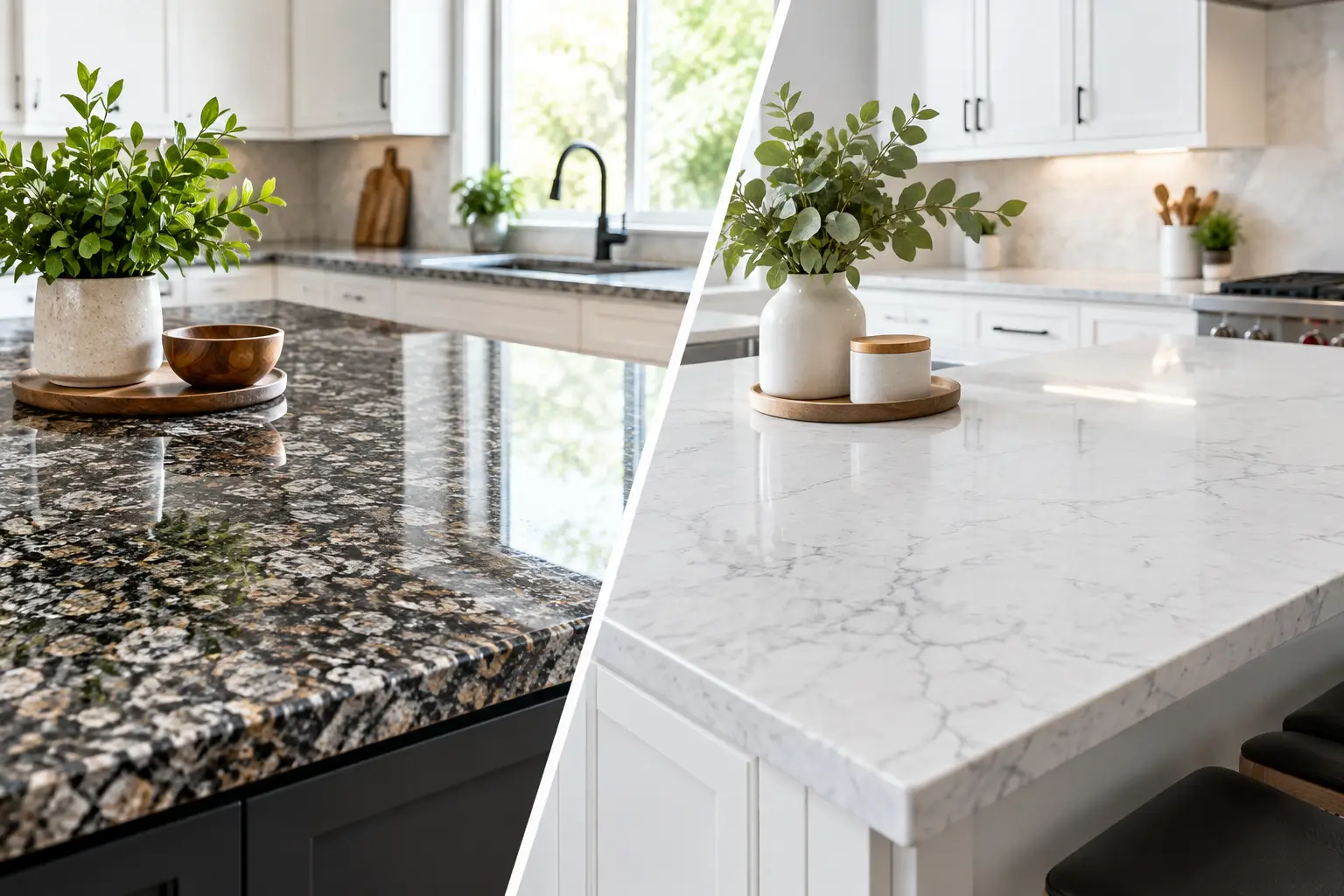
A countertop has to do more than look good on installation day. It needs to handle busy mornings, family meals, spills, hot cookware, and years of daily use without becoming a source of frustration. When homeowners compare granite versus quartz countertops, the better choice usually comes down to how they live, what look they want, and how much routine care they are willing to take on.
Both materials can create a beautiful, durable kitchen. The difference is that granite brings one-of-a-kind natural character, while quartz offers a more controlled appearance and lower-maintenance routine. Understanding the trade-offs before selecting a slab helps keep your kitchen remodel on time, on budget, and aligned with the way your household actually uses the space.
Granite Versus Quartz Countertops Compared
Granite is a natural stone cut from the earth, then shaped, polished, and installed as a countertop. Every slab has its own mineral patterns, movement, veining, and color variation. That natural individuality is the reason many homeowners love it.
Quartz countertops are engineered surfaces made from crushed natural quartz combined with resins and pigments. They are manufactured in a wide range of colors and patterns, including designs that resemble marble, concrete, or natural stone. Because quartz is made under controlled conditions, it generally delivers more consistency from one section of countertop to the next.
Neither material is automatically the right answer for every kitchen. A busy family that wants minimal upkeep may prefer quartz. A homeowner who wants a dramatic, natural slab with visible movement may feel that granite is worth the additional care.
Why Homeowners Choose Granite
Granite offers the kind of variation that cannot be duplicated exactly. A slab may feature subtle flecks, bold waves, or rich mineral deposits that turn an island into a true focal point. If your kitchen design calls for warmth, depth, and a surface with natural personality, granite can make the room feel more custom.
Natural beauty with real variation
With granite, viewing the actual slab matters. A small sample can suggest the color family, but it cannot show the full pattern, movement, or distribution of veining across a large island. This is especially important with highly active granite, where different areas of the same slab can look noticeably different.
Granite also works well with a wide range of cabinet styles. It can complement traditional wood cabinetry, transitional kitchens, or modern spaces that need a natural element to balance clean lines.
Heat resistance and daily care
Granite generally handles heat well, which is useful near a range or for homeowners who frequently cook with hot pans. Still, using trivets is a smart long-term habit. Extreme temperature changes can affect any countertop material, and protecting the finish helps preserve the investment.
The main responsibility with granite is sealing. Most granite countertops need periodic sealing to help resist stains and moisture penetration, although the frequency depends on the specific stone and sealer used. A properly sealed granite surface is durable and practical, but it is not completely maintenance-free. Acidic spills, oils, wine, and heavily pigmented foods should be wiped up promptly.
Granite can also chip at an exposed edge if struck hard with a heavy object. Professional fabrication and careful edge selection help reduce that risk, particularly around sinks and high-use corners.
Why Homeowners Choose Quartz
Quartz is often the practical favorite for homeowners who want a polished kitchen without adding a sealing routine to their maintenance list. Its nonporous surface resists staining well and does not typically require sealing. For families, frequent entertainers, and homeowners who simply want easier cleanup, that convenience can be a major benefit.
Consistent color and design flexibility
Quartz provides predictable color and patterning. If you prefer a crisp white surface, a soft marble-inspired look, or a uniform modern finish, quartz gives you more control over the final result. It can be especially useful in larger kitchens where a consistent look across long runs of countertop is a design priority.
That consistency does not mean quartz has to look plain. Many current options have realistic veining and layered detail. The key is choosing a design that fits the entire kitchen, including the cabinets, backsplash, flooring, lighting, and hardware. A countertop that looks striking by itself may feel too busy once every material is installed together.
Easy cleanup, with a few limits
Quartz is durable, but it is not indestructible. It performs very well against normal kitchen spills, scratches, and everyday wear. Mild soap, water, and a soft cloth are generally enough for routine cleaning.
Heat is where quartz requires more caution than granite. The resins used in engineered quartz can be damaged by direct contact with very hot pans or appliances that produce concentrated heat. Always use trivets or hot pads rather than placing cookware directly on the surface. Quartz can also fade or discolor in areas with intense, direct sunlight, so sun exposure should be considered when planning countertops near large windows or outdoor-facing doors.
Cost Depends on More Than the Material
It is common to hear that quartz costs more than granite, but the real picture is more detailed. Entry-level granite may cost less than many quartz selections, while premium exotic granite can exceed the price of standard quartz. The final investment also depends on slab size, thickness, edge profile, cutouts, seam placement, sink choice, demolition, and installation complexity.
A large island, waterfall edge, full-height backsplash, or multiple sink and cooktop cutouts can raise the cost of either material. In many remodels, fabrication and installation details have as much impact on the final price as the countertop category itself.
This is why an accurate estimate should be based on your actual kitchen layout and selected materials, not just a per-square-foot number. A knowledgeable remodeling team can help you compare options that meet your design goals without overlooking the installation details that affect the finished result.
How to Choose the Right Surface for Your Home
Start with the look you want to live with for years. Granite is the stronger choice when you appreciate natural variation and want every slab to feel distinct. Quartz is often the better fit when you want a specific color, controlled veining, and a more uniform finish.
Next, consider your household routine. If you cook often, place hot pans down without thinking, and are comfortable maintaining natural stone, granite may be a strong match. If you want the easiest possible cleanup and do not want to schedule periodic sealing, quartz may offer greater peace of mind.
Your kitchen lighting matters as well. Natural granite can change in appearance throughout the day as sunlight shifts across the room. Quartz patterns tend to remain more visually consistent, though direct sun exposure should be planned carefully. Bring cabinet samples, flooring samples, and backsplash ideas when viewing slabs or samples so you can judge the full combination rather than making a countertop decision in isolation.
Finally, think about resale in a practical way. Both granite and quartz are well-regarded surfaces that can support a quality kitchen renovation. Buyers tend to respond to a cohesive, professionally installed kitchen more than they respond to one countertop label alone. The right choice is the one that fits your home’s style and looks well cared for.
Installation Quality Protects Your Investment
Even the best countertop can disappoint if it is poorly measured, fabricated, or installed. Accurate templating helps ensure proper overhangs, clean seams, secure sink support, and a polished fit around walls and cabinetry. It also allows the installer to plan seam locations thoughtfully, especially on long countertop runs or large islands.
At JG Home Services, countertop selection is considered as part of the complete kitchen, not as an isolated purchase. Cabinet layout, backsplash height, plumbing fixtures, appliance clearances, and lighting all affect how the final surface performs and looks. Coordinating those decisions early helps avoid last-minute changes and keeps the project moving forward with confidence.
A countertop should make your kitchen easier to enjoy, not give you another maintenance concern to manage. Choose the surface that suits your habits, trust the details to experienced installers, and you will have a kitchen that feels right every time you walk into it.