
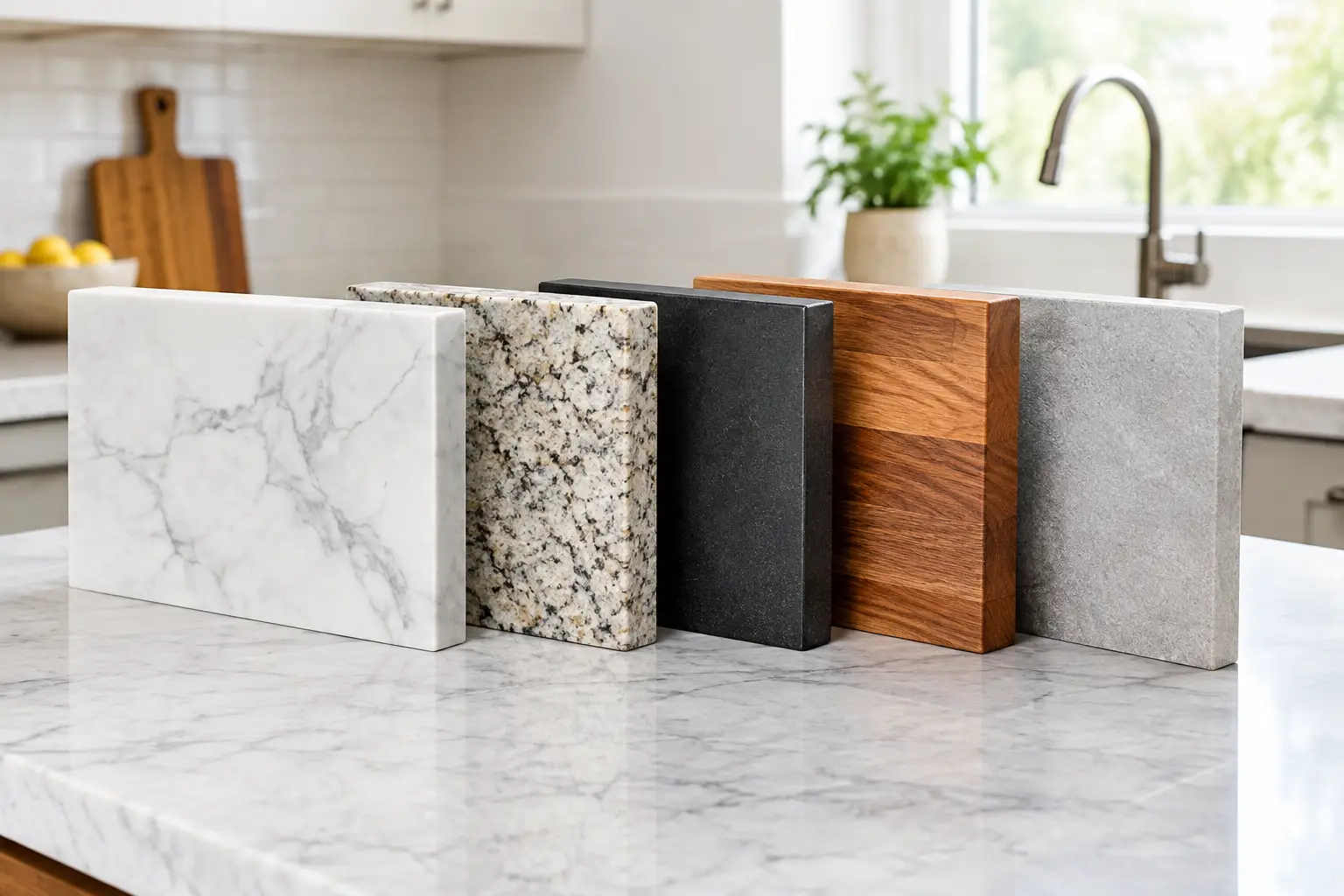
A countertop is where real kitchen life happens: weekday breakfasts, hot pans set down in a hurry, school projects, holiday prep, and cleanup at the end of a long day. The best materials for kitchen countertops are not always the ones that look best in a showroom. The right choice has to fit how your household cooks, cleans, entertains, and plans to use the kitchen for years to come.
For homeowners planning a significant kitchen renovation, countertop selection affects more than the finished look. It influences maintenance needs, cabinet design, backsplash details, budget allocation, and long-term resale appeal. Here is a practical look at the materials worth considering and the trade-offs behind each one.
Best Materials for Kitchen Countertops at a Glance
Quartz is the most dependable choice for many busy households because it combines a polished appearance with easy care. Natural stone, including granite and marble, brings one-of-a-kind character but asks more from the homeowner. Porcelain offers impressive heat and stain resistance, while solid surface, butcher block, and laminate can be smart choices when budget, warmth, or repairability is the priority.
There is no universal winner. A family that cooks every night may value low maintenance over dramatic movement in the slab. A homeowner building a showpiece kitchen may gladly accept a little extra care for natural marble. A good remodeling plan starts with those priorities rather than a color sample alone.
Quartz: The Practical Favorite for Busy Kitchens
Quartz countertops are engineered from natural quartz particles and resins. They are available in a wide range of colors and patterns, including options that resemble marble, concrete, and natural stone. Their consistency makes them especially useful when you want a predictable look across a large island, perimeter counters, and a full-height backsplash.
The biggest advantage is low maintenance. Quartz is nonporous, so it does not need routine sealing and resists most common kitchen stains. For households with kids, frequent cooks, or people who want a clean, refined finish without special upkeep, that is a meaningful benefit.
Quartz is not indestructible, however. It can be damaged by extreme heat, particularly around seams or edges, so trivets are still necessary. It is also typically more expensive than laminate or basic granite options. Installation matters because large slabs are heavy, seams must be planned carefully, and cabinets need to be level before fabrication begins.
Granite: Natural Beauty With Everyday Durability
Granite remains a strong countertop material because every slab is unique. Its mineral patterns, depth, and natural variation can give a kitchen a character that manufactured materials cannot fully duplicate. It is also highly heat resistant and handles normal kitchen use well.
A properly sealed granite countertop is durable and relatively easy to maintain. Still, sealing is part of ownership. Depending on the stone and sealer, it may need to be resealed periodically to help guard against stains. Some homeowners also find that selecting a slab requires more patience, since the sample in a design center may not reflect the exact movement or color of the full slab.
Granite works especially well in traditional, transitional, and rustic kitchens, but the right slab can also look at home in a clean contemporary design. The key is seeing the actual material before making a final decision.
Marble: Beautiful, Distinctive, and High Maintenance
Marble creates an unmistakable look. Its soft veining, subtle depth, and classic appeal make it a favorite for homeowners who want a kitchen with a timeless, elevated feel. It can be especially striking on a statement island or baking station.
The trade-off is that marble is more porous and softer than quartz or granite. Acidic foods and drinks such as lemon juice, wine, and tomato sauce can etch the surface. It can also scratch and develop a patina over time, even with careful use.
That does not mean marble is a poor choice. It means marble is best for homeowners who understand that its lived-in appearance is part of the material’s character. If you expect an always-perfect surface in a heavily used family kitchen, quartz or porcelain may be a better fit. Some homeowners choose marble for a smaller accent area and use a lower-maintenance material for the main work zones.
Porcelain: Strong Performance for Modern Designs
Porcelain slab countertops are gaining attention for their durability and clean, modern appearance. They are highly resistant to heat, scratches, stains, and UV exposure. This makes porcelain a compelling option for kitchens that receive strong sunlight or homeowners who want the same material to coordinate with an outdoor cooking area.
Porcelain is available in convincing stone-look finishes as well as solid colors and contemporary patterns. Because slabs can be thinner than many natural stone options, the edge detail and fabrication approach deserve careful planning. The material is tough, but edges can chip from a hard impact, and fabrication requires an experienced installer with the right tools.
For a sleek kitchen with large-format surfaces and minimal maintenance, porcelain is one of the best materials for kitchen countertops. It is often priced in the premium range, so it should be evaluated alongside quartz and natural stone during budgeting.
Solid Surface: Smooth, Repairable, and Flexible
Solid surface countertops offer a smooth, nonporous surface with inconspicuous seams and integrated sink options. They are comfortable to the touch, easy to clean, and available in many colors. Unlike stone, minor scratches and burns can often be sanded or repaired by a professional.
This material is a practical fit for homeowners who want a clean, cohesive design and simple maintenance without the cost of a premium stone slab. It is less heat resistant and less scratch resistant than quartz, granite, or porcelain, so it is not ideal for every high-use kitchen. Still, its repairability is a real advantage that should not be overlooked.
Butcher Block: Warmth That Requires Commitment
Wood countertops bring warmth that no stone-look surface can replicate. Butcher block can soften a kitchen filled with painted cabinetry, tile, and stainless steel, and it works particularly well on an island, coffee bar, or baking area.
Wood does require regular care. It can scratch, dent, darken with age, and react to standing water if neglected. Oiled finishes need periodic reapplication, while sealed finishes offer more protection but may be harder to repair locally. Homeowners who enjoy the natural evolution of wood often love it. Those who want a maintenance-free workspace may prefer it as an accent rather than the primary countertop.
Laminate: A Budget-Conscious Option With Better Style Choices
Laminate has improved significantly in recent years. Current designs can mimic stone, wood, and concrete while offering an affordable way to refresh a kitchen. It is easy to clean, comes in many patterns, and can help preserve more of the renovation budget for cabinets, lighting, appliances, or flooring.
Its limitations are clear: laminate is more vulnerable to cuts, heat damage, moisture at seams, and edge wear than premium materials. It does not offer the same long-term durability or resale appeal as quartz, granite, or porcelain. For a rental property, a secondary kitchen, or a cost-sensitive remodel, though, it can be a responsible choice when installed and detailed well.
How to Choose the Right Countertop Material
Start with how you use the kitchen, not just the look you saved online. Consider whether you regularly place hot cookware on the counter, whether you are comfortable with resealing, and how much natural variation you want in the finished room. Think about the countertop as part of the full design: cabinet color, backsplash, sink style, lighting, and flooring all affect how a slab will read in the space.
It is also wise to protect the installation budget. A beautiful material can disappoint if cabinets are not properly prepared, seams are poorly placed, or the edge profile does not suit the design. Accurate measurements, material inspection, and professional fabrication are what turn a sample into a finished kitchen that feels intentional.
At JG Home Services, we help homeowners weigh these practical details alongside design goals, so the finished kitchen reflects their vision and supports everyday life. The best countertop is the one you will enjoy using long after the renovation dust has settled.