
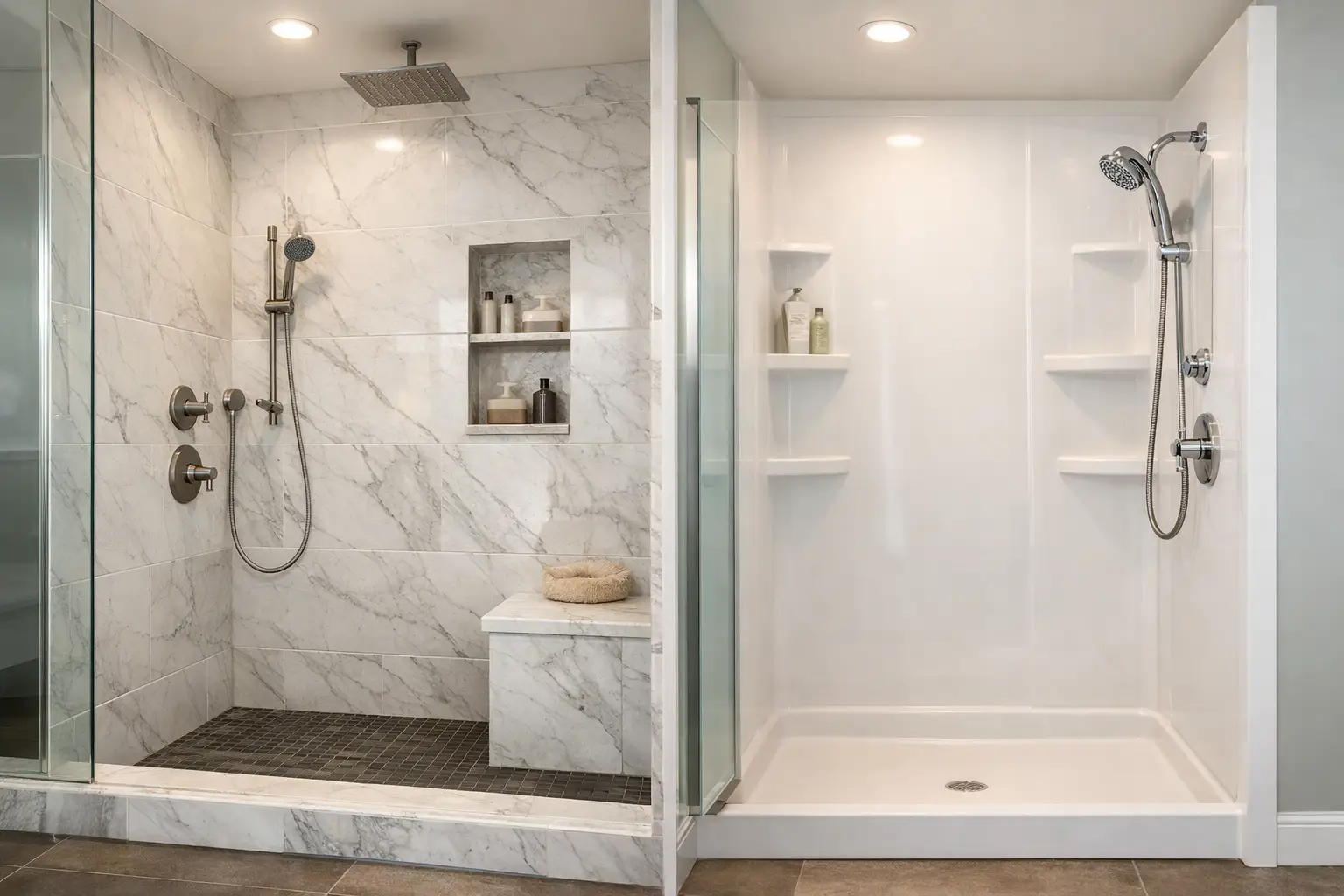
A shower that feels cramped, is difficult to clean, or leaks around an aging base can turn a routine morning into a daily frustration. When planning a bathroom remodel, the custom shower vs prefabricated shower decision affects far more than appearance. It shapes your budget, project timeline, layout options, and how the space will perform for years to come.
For many homeowners, a prefabricated shower is the practical answer to a straightforward replacement. A custom shower can be the better investment when the goal is a more personalized layout, elevated finish, or long-term transformation. The right choice depends on the condition of your bathroom, the way your household uses it, and what you want from the remodel.
Custom Shower vs Prefabricated Shower: The Main Difference
A prefabricated shower is a factory-made unit or system installed in your bathroom. It may be a one-piece fiberglass or acrylic enclosure, or a multi-piece shower kit with molded wall panels and a shower base. These products come in standard sizes and shapes, which makes them a familiar option for tub-to-shower conversions and bathrooms with a conventional layout.
A custom shower is built specifically for the room. It typically includes a waterproofed shower pan, tile or other finish materials, custom wall layouts, fixtures, niches, benches, and often a glass enclosure. Rather than fitting the bathroom around a manufactured unit, the shower is designed around the available space and the homeowner’s priorities.
Neither approach is automatically better. A well-installed prefabricated shower can be durable, clean-looking, and budget-conscious. A properly built custom shower offers more flexibility and a more tailored result, but it demands careful planning and skilled installation.
When a Prefabricated Shower Makes Sense
Prefabricated showers are often the best fit when efficiency matters most. If you are replacing an outdated tub or a damaged shower in an otherwise functional bathroom, a quality acrylic or fiberglass system can provide a clean update without expanding the scope of the project.
The initial cost is usually lower because the components are manufactured in advance and installation is generally faster. Fewer field-built details can mean less labor, particularly when the existing plumbing and footprint remain in place. This can be helpful for homeowners preparing a property for sale, updating a secondary bathroom, or working within a defined renovation budget.
Maintenance is another advantage. Molded wall panels have fewer grout lines than tile, so they are quick to wipe down and require less ongoing sealing. For a busy family bath or a rental property, that simplicity has real value.
There are limits, however. Standard units offer fewer size and layout choices. If your bathroom has an unusual footprint, a window near the shower, or a sloped ceiling, finding a kit that fits cleanly can be difficult. Some homeowners also prefer the visual depth and finish options that tile, stone, and glass provide.
What to Watch for With Prefabricated Units
Quality varies widely. Thin, entry-level units can flex underfoot or feel less substantial over time. The installation details matter just as much as the product itself: the base must be level, wall connections must be secure, and plumbing penetrations must be sealed correctly.
A one-piece unit can be very durable, but it may be difficult or impossible to bring into an existing home with tight hallways, narrow doors, or a finished basement. Multi-piece systems solve the access issue, though the seams need to be installed with care. Before choosing a product, consider both the shower you want and the path required to get it into the room.
Why Homeowners Choose a Custom Shower
A custom shower gives you control over the details that make a bathroom work better. That can mean extending the shower along a wall, creating a larger walk-in entry, adding a recessed niche for shampoo, or selecting a low-threshold base that is easier to step into. In a primary bathroom, these choices can make the room feel more comfortable every day.
Design is a major benefit. Tile allows homeowners to choose the color, scale, texture, and pattern that support the rest of the bathroom. Large-format porcelain can create a clean, contemporary look with fewer grout lines. Smaller mosaic tile can add grip on a shower floor. A frameless glass panel can keep the room open, while a tiled bench can add convenience without making the space feel crowded.
Custom work is also valuable in older homes, where walls may not be square and existing dimensions rarely match standard product sizes. A thoughtful design can use those conditions to create a shower that appears intentional rather than forced into place.
The trade-off is cost and time. Custom showers require demolition, substrate preparation, waterproofing, tile setting, grout work, fixture installation, and often glass fabrication. Each phase must be completed correctly. A beautiful tile surface cannot compensate for poor waterproofing behind it.
Waterproofing Is the Detail That Protects the Investment
Homeowners understandably focus on tile and fixtures, but the most critical portion of a custom shower is hidden. The shower pan, wall membrane, drain connection, corners, and penetrations must work together as a complete waterproofing system.
This is not an area to cut corners. Water that reaches framing or subflooring can lead to rot, mold, damaged finishes, and costly repairs. An experienced remodeling contractor will evaluate the existing structure, address any damage uncovered during demolition, and build the shower assembly according to the materials and conditions of the space.
At JG Home Services, that attention to preparation and detailed execution is part of creating a bathroom that is built to serve your home well, not just look finished on installation day.
Comparing Cost, Timeline, and Long-Term Value
A prefabricated shower typically has a lower upfront cost, especially when the footprint, drain location, and plumbing remain unchanged. It can also reduce downtime, which matters when the bathroom is heavily used or is the only full bath in the home.
A custom shower is usually a larger investment because it includes more material choices, labor, and specialized work. Moving plumbing, changing walls, enlarging the shower, or adding glass can increase the total. Yet the value is not limited to resale potential. A well-designed custom shower can improve daily comfort, make better use of the room, and help a dated primary bath feel like a space you genuinely enjoy.
For resale, both options can be positive if they are clean, functional, and professionally installed. In an updated primary bathroom, buyers may place greater value on a spacious, tile shower with modern fixtures and glass. In a hall bath, a durable, low-maintenance prefabricated shower may be entirely appropriate. The best decision should match the home, neighborhood, and level of the overall renovation.
How to Choose the Right Shower for Your Home
Start with the problem you are trying to solve. If you need a reliable replacement with a quicker installation and easy upkeep, a prefabricated system may check every important box. Choose a high-quality product, avoid compromising on installation, and keep the design consistent with the rest of the bathroom.
If your current shower is too small, poorly laid out, difficult to access, or disconnected from the style you want for your home, custom construction is worth exploring. It is especially compelling when you are already updating flooring, vanity cabinetry, lighting, or plumbing fixtures as part of a complete bathroom remodel.
It also helps to think ahead. A low or curbless entry, a hand shower, a bench, and properly placed storage can support aging in place without making the bathroom feel clinical. These features are easier to incorporate during a planned remodel than after the fact.
A clear estimate and design conversation should explain what is included, where costs may change, and what conditions could affect the schedule. Good planning keeps decisions organized before demolition begins and helps the project stay on time and on budget.
The shower you choose should fit your life as comfortably as it fits your bathroom. Whether that means a straightforward prefabricated replacement or a fully custom retreat, the lasting result comes from thoughtful design, quality materials, and workmanship that respects every detail.