
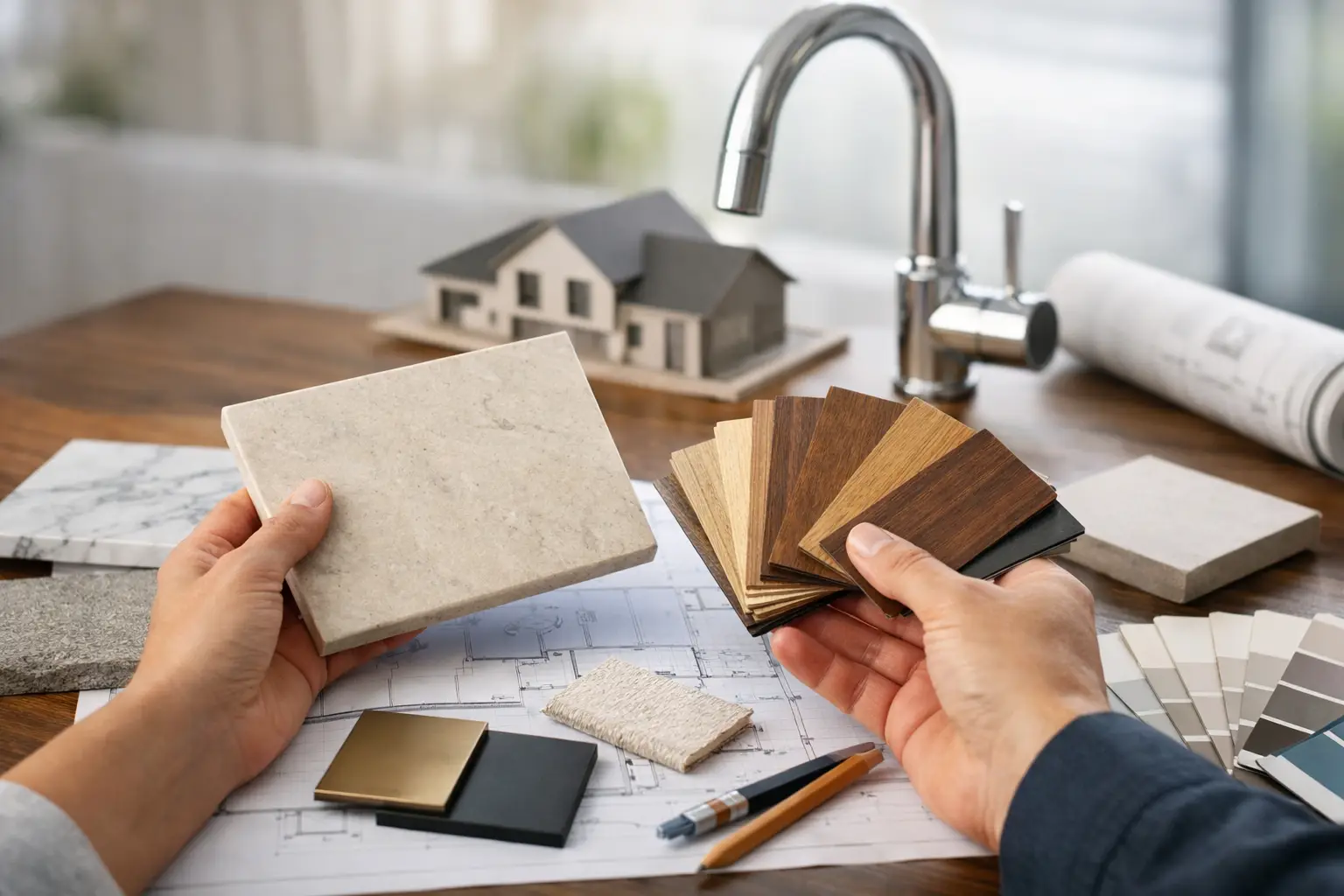
A countertop sample can look perfect under showroom lights and completely different beside your kitchen window at 8 a.m. That is why smart remodeling material selection tips go beyond choosing the color you like most. The right materials need to suit how your household lives, perform well in the room, work within the project budget, and still feel like a choice you will appreciate years from now.
For most homeowners, material decisions are where a remodel starts to feel real. Cabinets, flooring, tile, fixtures, countertops, paint, and hardware shape the finished space, but they also affect cleaning routines, repair needs, project timing, and long-term value. A thoughtful plan prevents expensive changes later and helps keep the project on time and on budget.
Start With How the Room Will Be Used
Before comparing finishes, think about the daily demands of the space. A kitchen used for family dinners, school mornings, and frequent entertaining needs different materials than a kitchen used by one or two adults. A hall bathroom shared by children needs more durable surfaces than a low-traffic powder room. A basement used as a playroom has different flooring needs than a finished basement designed as a guest suite.
Ask practical questions early. Will the floor see wet shoes, pets, dropped cookware, or heavy furniture? Do you want a countertop that can tolerate frequent meal preparation? Is the bathroom vanity exposed to splashing water every day? These answers narrow the field quickly.
A beautiful material is still a poor fit if it creates more maintenance than your household wants to handle. Natural stone, for example, delivers character that manufactured materials cannot fully duplicate, but some stones require regular sealing and can etch or stain. Quartz offers a more consistent appearance and lower maintenance, though it may not be the right choice for every budget or design style.
Set a Material Budget Before Falling in Love
Materials can account for a substantial portion of a kitchen, bathroom, or basement renovation. It helps to establish an overall investment range before shopping, then decide where higher-end selections will have the greatest impact.
Not every surface needs to be premium. In many kitchens, homeowners choose to invest in cabinetry, countertops, and a durable floor because those elements receive the most use and are more difficult to replace. A backsplash, cabinet hardware, or decorative light fixture can often provide a custom look without consuming the same share of the budget.
The lowest price is not always the best value. A less expensive floor that scratches easily or a vanity that swells from moisture may cost more in frustration and replacement than a better product selected at the start. At the same time, paying for an upgrade that does not improve function or appearance in your specific room may not make sense. Good decisions come from comparing total value, not just the initial price tag.
It is also wise to reserve a portion of the budget for necessary supporting materials. Tile installation may require underlayment, waterproofing, grout, trim, and substrate repair. New flooring may call for leveling work or moisture protection. These details are not as visible as the finished tile or wood, but they protect the investment and support a quality installation.
Compare Materials in the Actual Space
One of the most useful remodeling material selection tips is simple: take samples home. Hold them against existing features that will remain, such as woodwork, windows, paint, or furniture. Look at them in daylight, evening light, and artificial light. A warm white tile may read creamy next to cool-gray cabinets, while a floor sample that appears neutral in a store may have a strong yellow or red undertone at home.
Review larger samples whenever possible. A small quartz chip cannot show the movement of a full slab. One tile may look subtle, while a wall of that same tile can feel much busier. Flooring samples should be viewed side by side because natural variation and plank pattern affect the overall result.
Pay attention to sheen as well as color. Polished surfaces reflect more light and can make a room feel brighter, but they may show water spots, fingerprints, or scratches more easily. Matte finishes can be forgiving and current, yet some textured materials may hold dirt in high-use areas. There is no universal right answer. The right finish is the one that fits the room’s lighting, style, and maintenance expectations.
Choose Durable Surfaces for Kitchens and Bathrooms
Kitchens and bathrooms put materials under constant pressure from water, heat, impact, cleaning products, and everyday wear. Durability should be a leading factor, especially on the surfaces touched most often.
For kitchen counters, quartz remains a popular option because it is nonporous, easy to clean, and available in a wide range of looks. Granite offers natural movement and strong heat resistance but generally needs periodic sealing. Solid surface counters provide a clean, integrated appearance and can often be repaired, although they are more vulnerable to heat and scratches. The best choice depends on how you cook, how much maintenance you prefer, and the look you want to achieve.
In bathrooms, moisture management matters just as much as the visible finish. Porcelain tile is a dependable choice for floors and shower walls because it resists water and stands up well to daily use. Natural stone can create an elevated look, but it requires appropriate sealing and cleaning. For shower construction, proper waterproofing behind the tile is essential. Tile and grout alone are not the waterproofing system.
Cabinet materials deserve careful consideration too. Solid wood, plywood construction, furniture-grade finishes, and quality hardware can make a meaningful difference in longevity. In bathrooms, choose a vanity designed for humid conditions and make sure it is installed with proper clearances and protection from standing water.
Do Not Overlook Flooring Performance
Flooring connects every part of a remodel, so it has to work hard while supporting the overall design. The best option varies by room.
Hardwood brings warmth and lasting appeal, especially in main living areas, but it can be sensitive to moisture and may show wear in busy households. Luxury vinyl plank is water-resistant, comfortable underfoot, and practical for basements and active family spaces. Tile offers exceptional durability and water resistance in bathrooms, entries, and laundry areas, though it can feel cooler and harder underfoot. Engineered wood can offer the appearance of hardwood with added dimensional stability, but it is not a substitute for proper moisture control in below-grade spaces.
For a basement remodel, start by evaluating the concrete slab and moisture conditions. A finished basement floor should not be chosen on appearance alone. Moisture testing, suitable underlayment, and the right installation method help protect the floor from failure after the project is complete.
Build a Cohesive Look Without Matching Everything
A coordinated home does not require every room to use the same tile, cabinet color, or metal finish. In fact, too much matching can make a remodel feel flat. The goal is to create intentional connections between spaces.
Choose a few elements to repeat, such as warm wood tones, a consistent metal finish, or a related color family. Then allow each room to have its own purpose and personality. A kitchen may feature warm white cabinets and brushed nickel hardware, while a nearby powder room uses a darker vanity with the same hardware finish. The rooms feel related without looking copied.
Be careful with trends that are difficult or expensive to reverse. A bold paint color can be changed later. A highly patterned floor, a dramatic countertop, or a permanent tile installation deserves more consideration. If you love a strong pattern, using it in a backsplash, niche, or accent wall can provide visual interest without taking over the entire room.
Plan for Availability and Installation Details
The material you select must be available in the quantity needed, within the project schedule, and in suitable condition for installation. Special-order cabinets, custom countertops, tile with long lead times, and discontinued product lines can affect the renovation timeline. Ordering extra tile or flooring from the same production run is often smart, particularly for products with natural variation.
Installation requirements matter as much as product selection. Large-format tile may need a flatter substrate. Heavy stone counters may require cabinet reinforcement. Certain flooring products have limits around temperature changes, direct sunlight, or moisture exposure. Discuss these conditions before purchase, not after materials arrive at the jobsite.
A full-service remodeling partner can help connect those decisions. At JG Home Services, material guidance is part of creating a finished space that looks right, performs well, and is installed with the attention to detail your home deserves.
Make Final Selections With Confidence
When you are down to a few choices, return to the priorities that matter most: daily use, maintenance, budget, durability, and the feeling you want when you walk into the room. If a choice only works in perfect conditions or requires a level of upkeep that does not suit your routine, it may not be the right one.
The best materials are not always the most expensive or the most dramatic. They are the ones that support your life, fit the room, and give your remodel a finished look you can enjoy without second-guessing every spill, scratch, or busy morning.